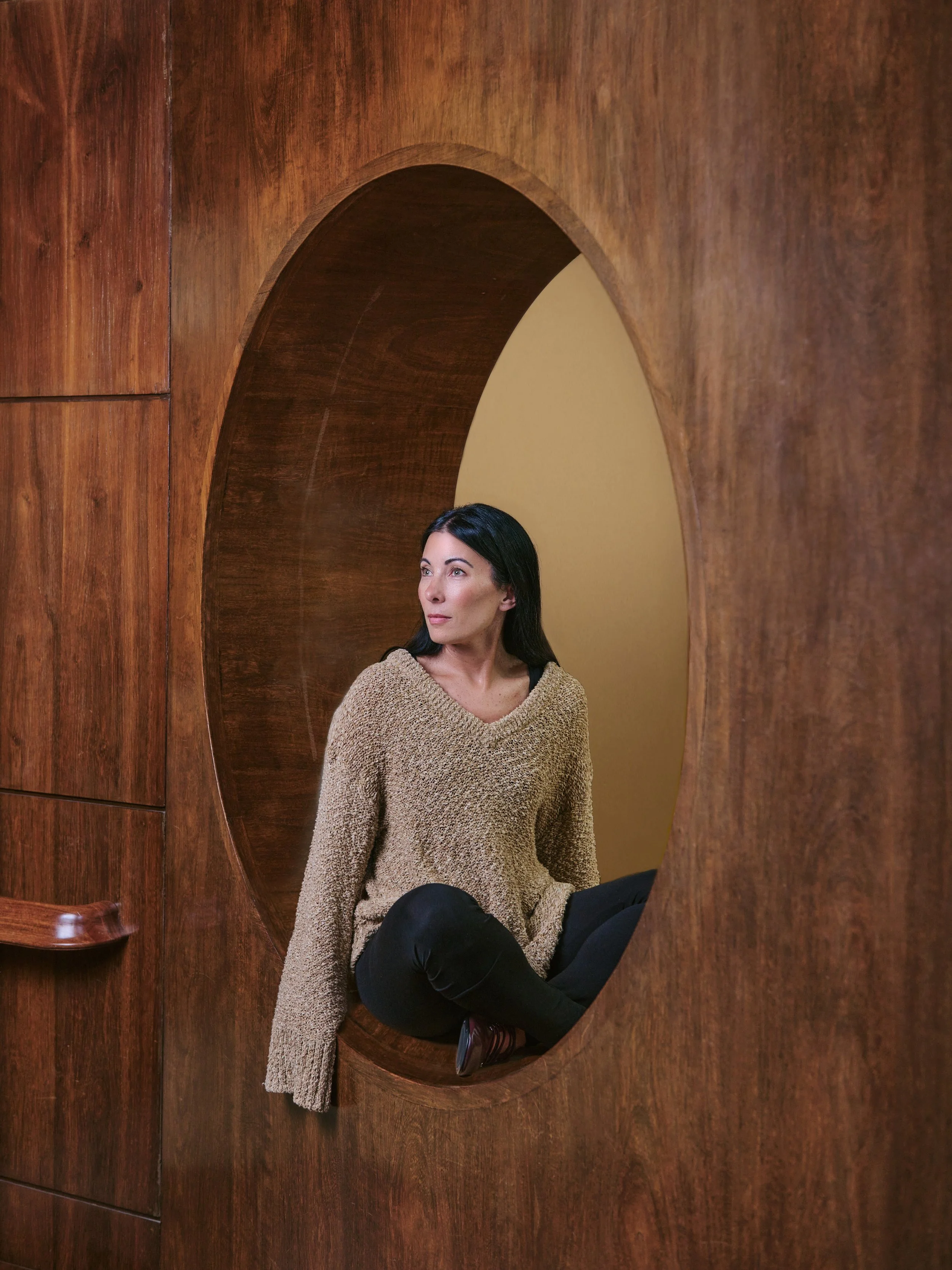
In Conversation With: Egor Sharay
We were thrilled to have the opportunity to sit down with Egor, a voice that has become increasingly prominent within the luxury lifestyle, art, and design conversation in the Middle East. A journalist, cultural commentator, and keen observer of the region’s evolving creative landscape, Egor has spent more than a decade shaping how art, culture, and luxury are understood, communicated, and valued—particularly in Dubai and the wider Gulf.
Known for his thoughtful storytelling and ability to translate complex cultural shifts into compelling narratives, Egor has played a key role in championing artists, galleries, and creative ecosystems long before they entered the global spotlight. From leading influential luxury publications to authoring his recent book Dubai: The Art of Wealth, his work consistently explores the intersection of identity, place, creativity, and ambition.
In this interview, we speak with Egor about his background, his journey through journalism and visual culture, and how living and working in Dubai has shaped his perspective on luxury, art, and cultural investment. He also shares insights into the city’s rapid creative evolution, the ideas behind his latest book, and the experiences—both artistic and culinary—that continue to inspire his work today.
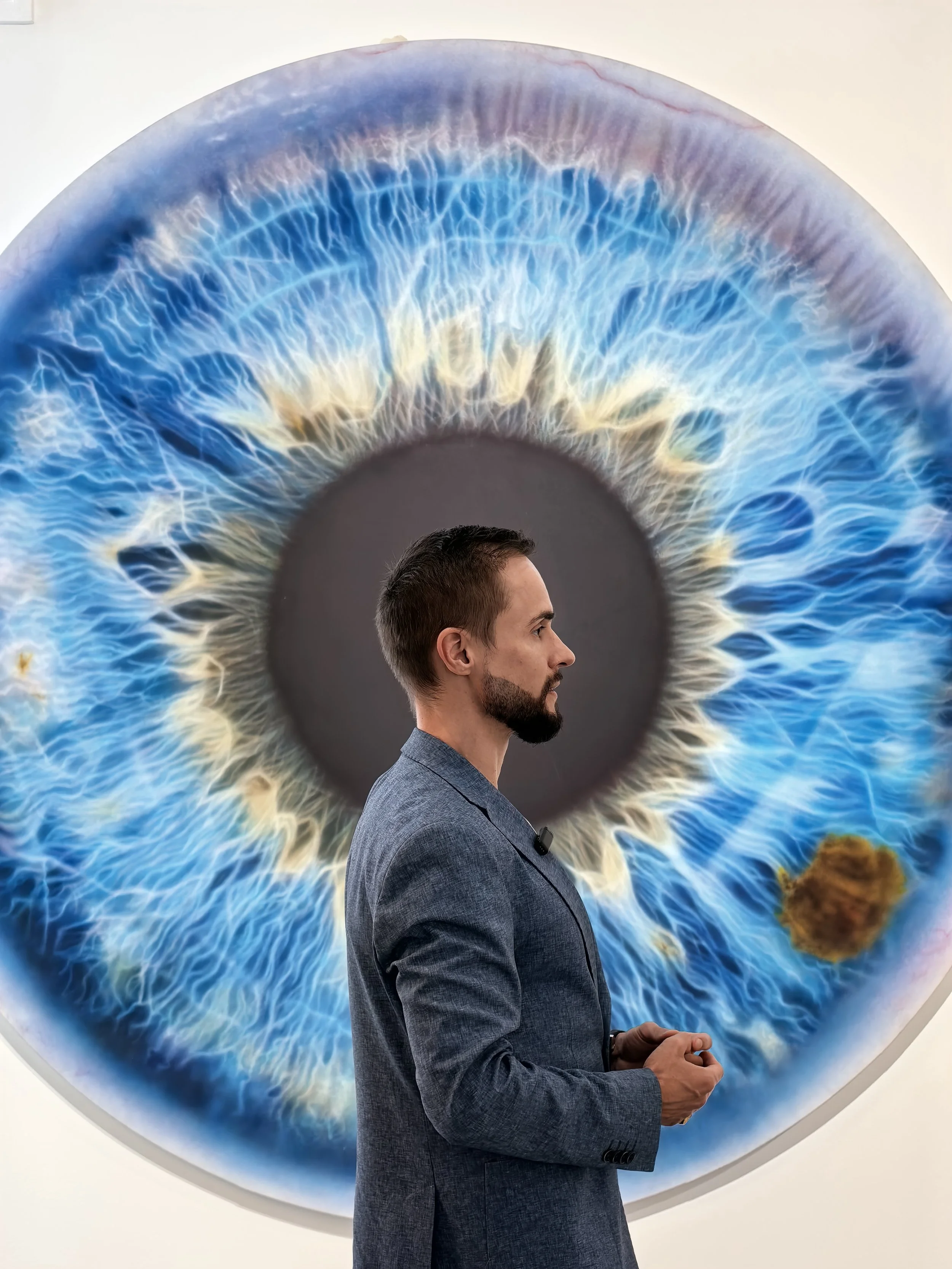
If you were to introduce your life's work in art and culture to someone new, what is the story you would tell? What is the through-line that connects your various projects?
People are often a little confused about what exactly I do. Some are convinced I’m an artist, others are sure I work in PR. And after I launched my book earlier this year, “Dubai: The Art of Wealth,” a few even decided I must be a life coach helping people become richer, which, I admit, is my favourite misunderstanding.
In truth, it’s much simpler. I am a journalist – but one with a deep, long-standing interest in the cultural landscape and the art market, particularly here in the Gulf. My work is to observe, interpret, and translate the region’s artistic and cultural rhythms into stories that make sense. And that, I suppose, is the thread that ties all my projects together: a desire to understand how art and culture shape this region’s identity and future, and to share those insights with others.
Can you tell us a little about your background and what initially drew you into the world of art, storytelling, and visual culture?
I’m of Russian origin, but I was born in Tashkent, Uzbekistan – a place you’ve surely heard mentioned more often recently, especially after the Bukhara Biennale this past October. It was the first event of its kind in Central Asia, and Gayane Umerova, Chairperson of the Art and Culture Development Foundation of Uzbekistan, did an extraordinary job. The biennale was so successful that the organisers ended up extending it for an extra month. I could easily talk about Uzbekistan – its history, its people, its culture – for hours. But let me return to my own path.
I began working as a journalist when I was fourteen. It started with a popular teenage newspaper, the kind of place where you learn everything by doing – sometimes brilliantly, sometimes painfully. Later, while studying at university, I joined a national newspaper as a reporter, which set me firmly on the trajectory I’m still on today.
In 2008, I moved to Dubai after being invited to lead one of the region’s luxury print magazines. Back then, the city’s cultural and artistic scene was still comparatively modest – vibrant in spirit but small in scale. My colleagues and I would literally “hunt” for artists to feature, and some months it felt like searching for rare birds in the desert. Yet even then, you could sense that something important was beginning to take shape. Since that time, I’ve consistently championed cultural and art coverage in every publication and media project I’ve worked with. And along the way, I’ve been fortunate enough to witness the rise of many of the artists who now define the UAE’s creative landscape.
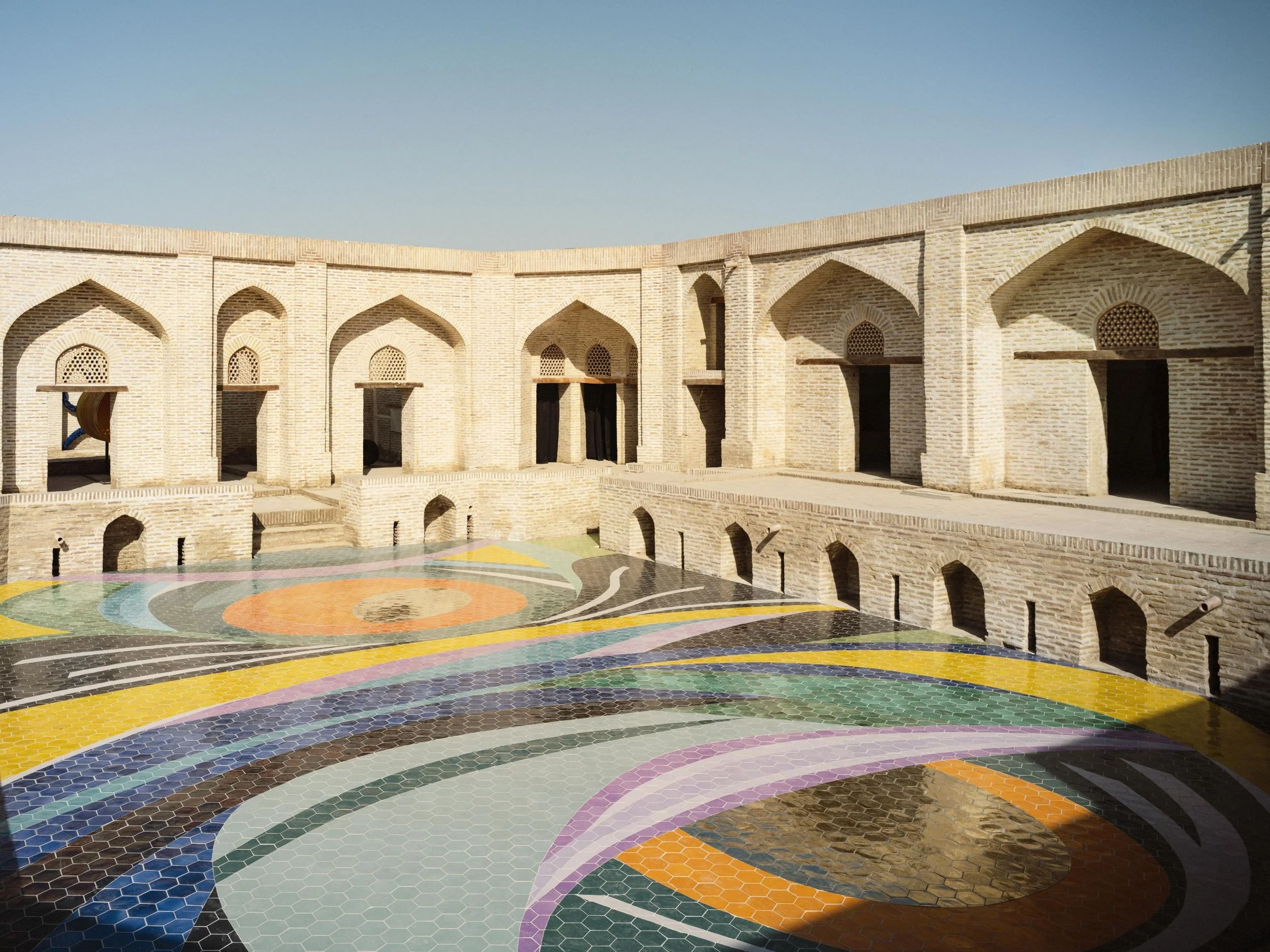
Uzbekistan's inaugural Bukhara Biennial -'Untitled', 2024–2025, by Marina Perez Simão in collaboration with Bakhtiyar Babamuradov - Felix Odell/Uzbekistan Art and Culture Development Foundation
Your work often explores the interplay between luxury, identity, and place. How has living and creating in Dubai shaped your professional perspective?
For me, one of the essential missions of my work has always been to explain to businesses outside the creative sphere that culture is not a beautiful accessory – it is an investment. In the long term, supporting artists and nurturing creative talent brings far deeper, more sustainable value to any business and, ultimately, to society as a whole. But convincing people of this wasn’t always easy.
When I first began prioritising cultural content in my journalism, it was a rather delicate balancing act. On one side stood publishers who firmly believed that every page in a magazine should generate revenue – and, as we all know, neither artists nor galleries are usually in a position to pay for features. On the other side were the brands and their marketing teams, who didn’t yet see local artists as particularly relevant to collaborate with, and certainly didn’t recognise my proposed cultural content as “luxury.” So there I was – walking a tightrope between editorial integrity and commercial expectations, trying not to disappoint either side while still championing the creative voices I believed in.
But Dubai changes you. Or rather, it teaches you to persist, because the city itself thrives on the courage of people who keep pushing until the landscape shifts. And it did shift. Nearly a decade later, we’re witnessing something remarkable: major luxury houses – Loro Piana, Hermès, Rolex, to name just a few – are actively collaborating with local artists to build meaningful connections with audiences in the Middle East. What once seemed like a far-fetched idea has become standard practice.
It took ten years, and the battle isn’t entirely over. But living and working in Dubai taught me that cultural advocacy is not a sprint – it’s a long, elegant marathon with many unexpected turns. And the view, I must say, keeps getting better.
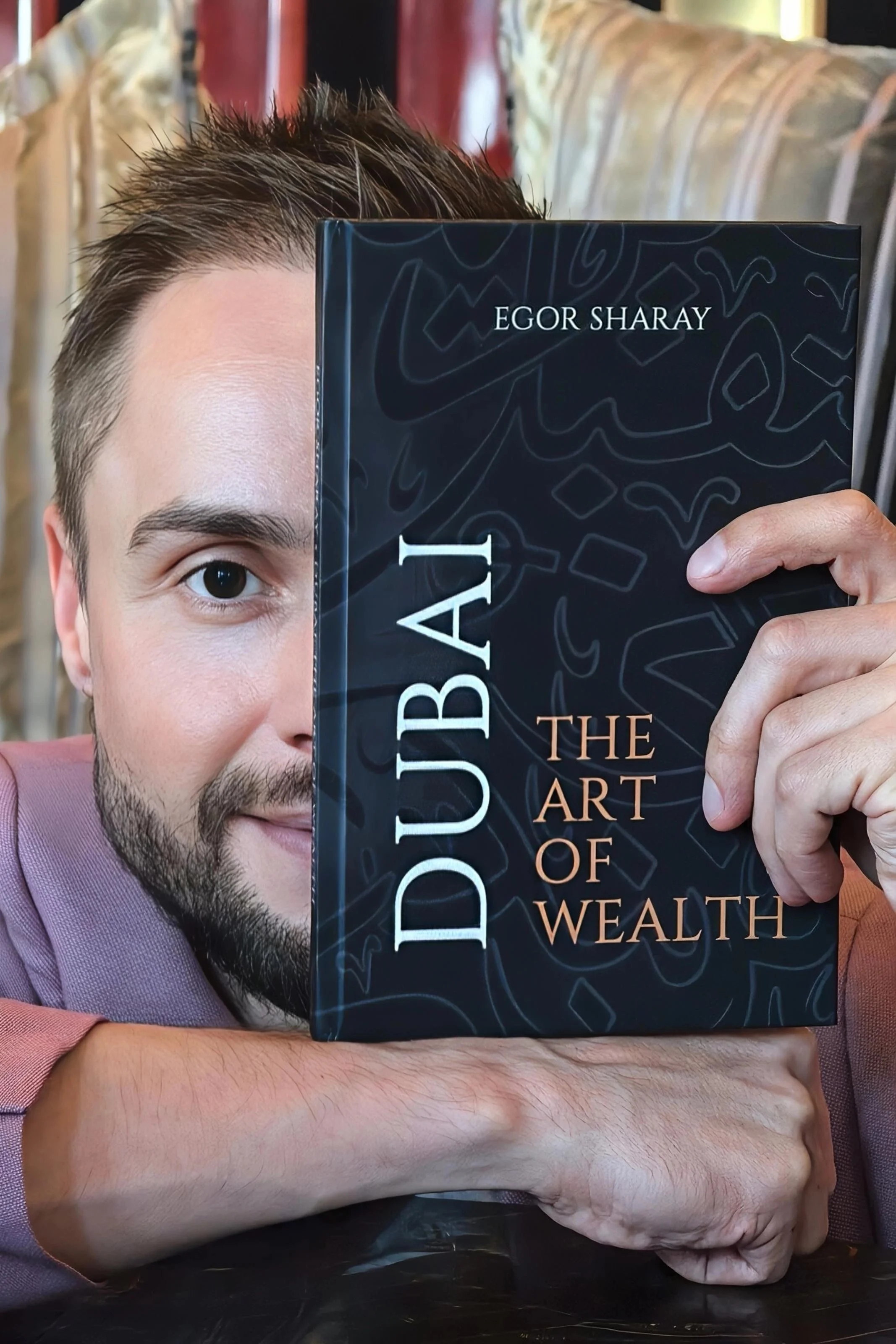
You’ve just released your new book, Dubai: The Art of Wealth. What inspired this project, and what conversations or reflections were you hoping to ignite through it?
In one of the chapters of Dubai: The Art of Wealth, I explore what I call the “business–artists ecosystem.” For instance, many major developers now collaborate with artists and galleries to make their buildings and public spaces more liveable and inspiring. Today’s tenants are often digital nomads – tech-savvy individuals who may know little about art, yet instinctively seek environments that spark creativity and fresh ideas. And, more often than not, it is art and culture that deliver that spark.
The book was launched in April 2025. It spans 160 pages and includes several illustrations, and I worked on it intensively for eight months. Yet, the foundation of the project was built over years – a career spent collecting materials, conducting interviews, attending discussions, and engaging with cultural leaders, artists, and gallerists across Dubai. Rather than presenting it as a series of interviews, I distilled these experiences into analysis and narrative, offering a perspective on the contemporary cultural and art scene in the UAE. My hope with this book was to ignite conversations about the intersection of wealth, creativity, and identity – to show that art is not merely decoration or luxury, but a force that shapes how we live, work, and imagine the future. The book is available on Amazon, in both print and digital editions.
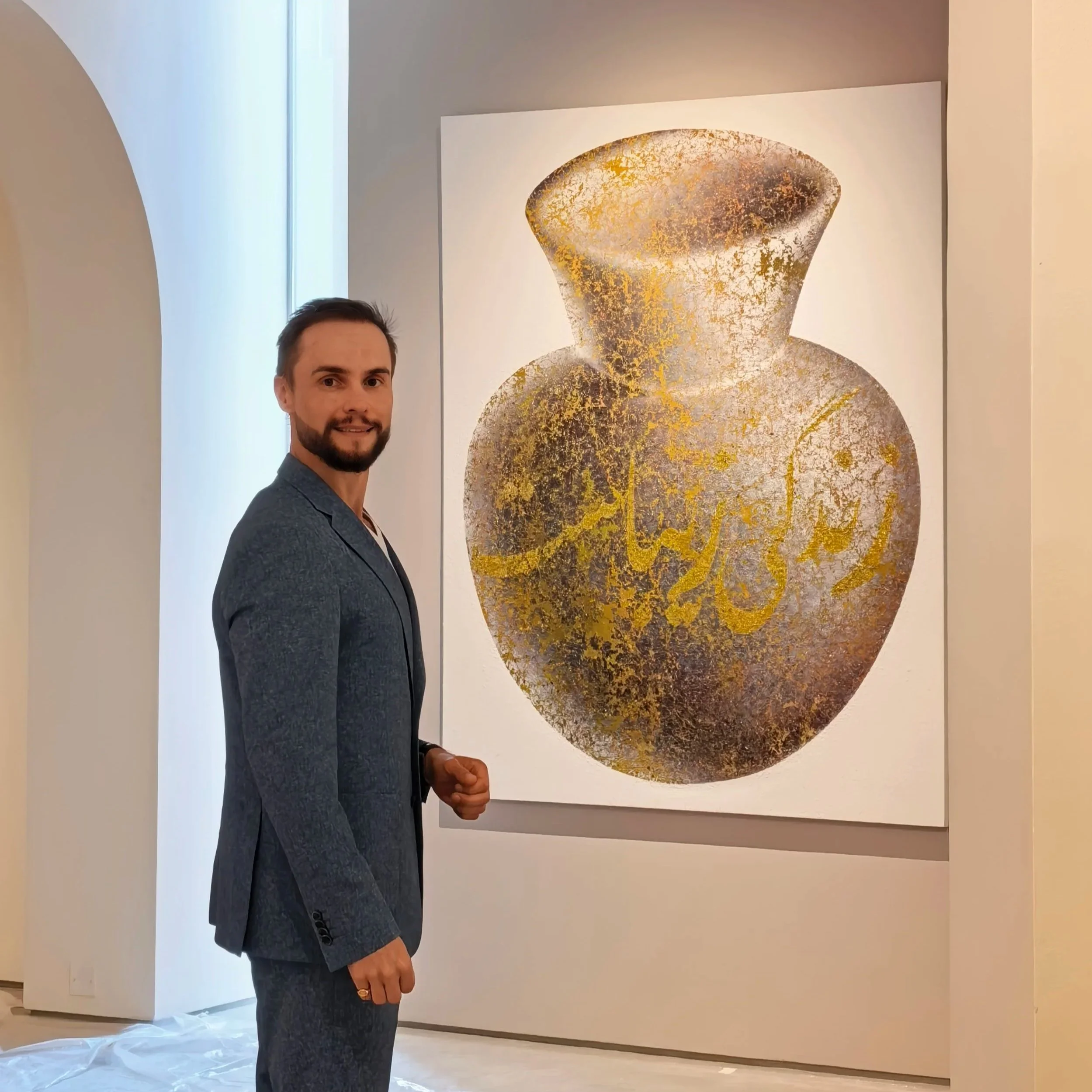
The book captures Dubai at a fascinating cultural moment. What themes or stories were most important for you to highlight in this publication?
I have always been fascinated by Middle Eastern culture. I come from a multicultural background – Russian by origin, raised in a country shaped by a strong Oriental and Muslim influence. By the time I arrived in Dubai, I already carried a cocktail of European, Eastern, and Asian values. Dubai, with its extraordinary mix of cultures and nationalities, offered the perfect environment to explore and expand that perspective.
Earlier this year, in January 2025, H.H. Sheikha Latifa bint Mohammed bin Rashid Al Maktoum, Chairperson of the Dubai Culture and Arts Authority, highlighted this remarkable social tapestry during the World Economic Forum in Davos. She spoke of a city where 180 nationalities coexist harmoniously, each celebrating its identity while contributing to the unique character of Dubai – a point I was keen to reflect in the book.
Beyond this, I focus on the contemporary cultural scene and the ways artists can thrive in the UAE, illustrating it with specific cases and examples. For me, it was essential to capture both the city’s rich, multicultural fabric and the dynamism of its creative ecosystem – how tradition, ambition, and talent intersect to shape Dubai’s distinctive cultural moment.
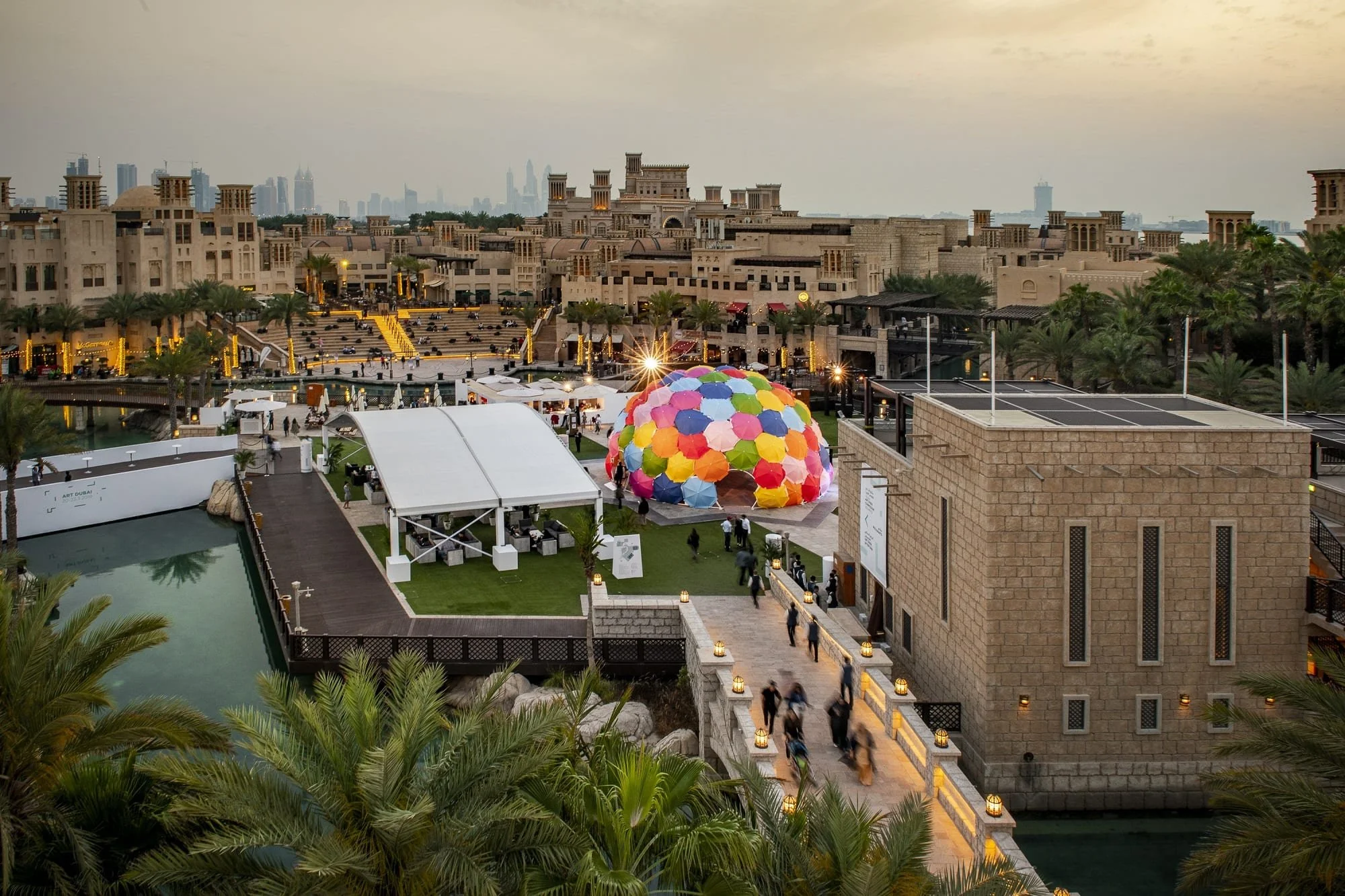
Art Dubai
In researching and creating Dubai: The Art of Wealth, were there any surprising discoveries or insights about the city that changed your view of it?
As you may know, many of the artists’ stories and interviews became part of the book’s narrative. What truly surprised and delighted me was following up on some of the people I had first spoken with five to seven years ago. Seeing how they have since flourished, achieved their goals, and made a tangible impact on the cultural scene was immensely rewarding. There’s a special satisfaction in recognising talent before it becomes widely acknowledged – in being among the first to ask the questions, to notice the potential. It’s moments like these that remind me why chronicling Dubai’s cultural evolution has been such a privilege: witnessing ambition, creativity, and persistence come to fruition is as inspiring as the city itself.
With Dubai’s creative scene evolving so quickly, where do you think the city sits today in the global conversation about art and design?
Dubai is an exceptional example of how a city can be reimagined and how the creative industries can generate a profound impact on both social and business life. Take Art Dubai, the city’s annual art fair – it perfectly illustrates how perspectives have evolved over the years. In the beginning, many galleries and institutions dismissed it as a local event of little significance. Today, the most prestigious galleries from major cultural capitals pay substantial sums just to secure a booth, and Art Dubai has become a must-visit event on the global art map.
Of course, the city’s affluent residents and visiting collectors play a role, but there’s more to it. The Middle East – and the broader Global South – has emerged as a new focal point for artistic attention. We are familiar with Western art and its established narratives; there is little left that feels truly new there. But the vibrant, diverse cultures and emerging artistic expressions in this region remain, in many ways, terra incognita – uncharted territory that is irresistibly inviting to explore.
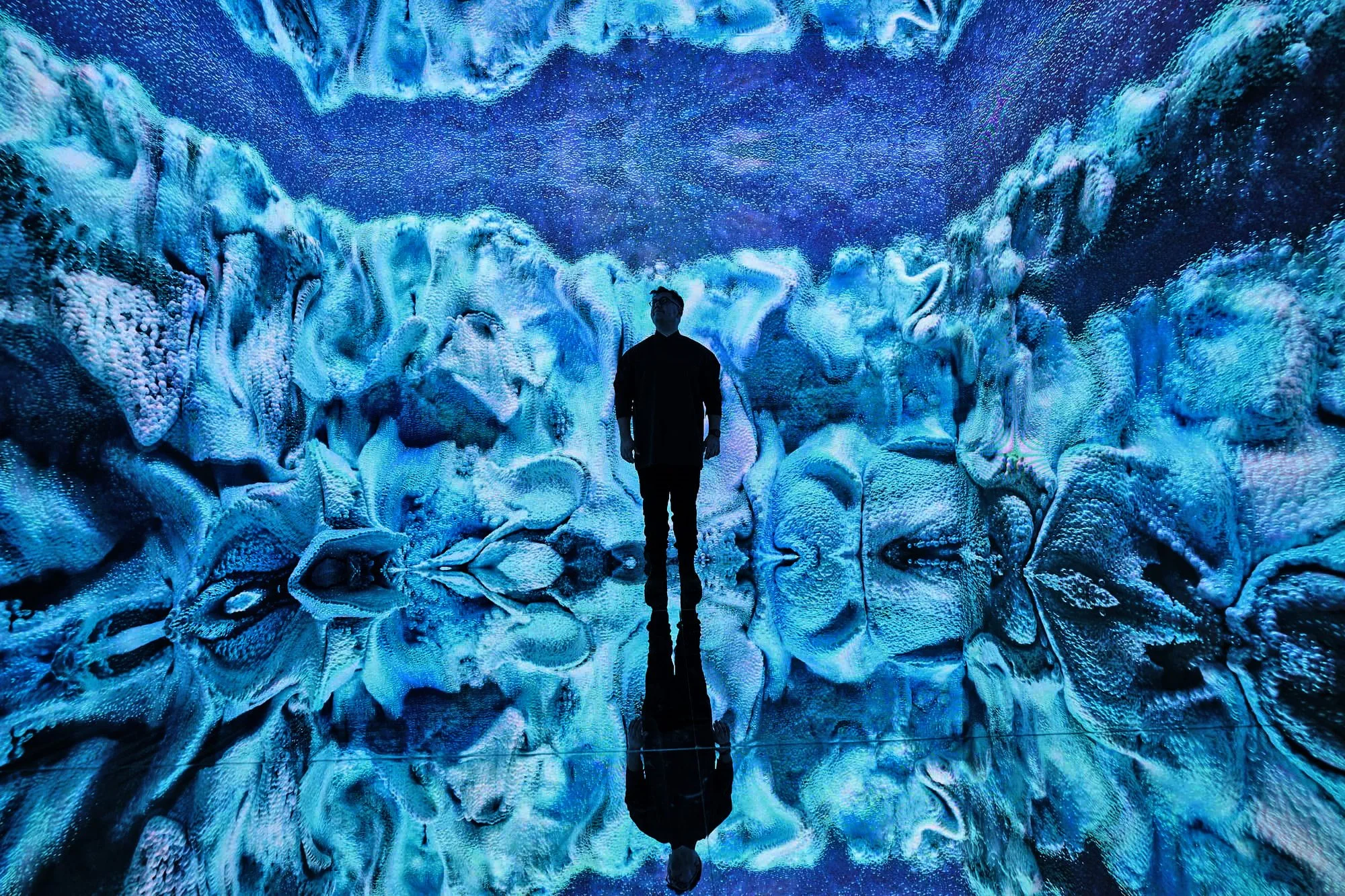
Art Dubai - Artist Refik Anadol immersive installation ‘Glacier Dreams’ Image courtesy of Goverment of Dubai Media Office
For visitors or new residents interested in art, what are your go-to places in Dubai and the wider UAE to discover compelling exhibitions, galleries, or creative communities?
The number of places to explore art in the UAE is growing rapidly. In Dubai, Alserkal Avenue remains the city’s creative hub – a dynamic ecosystem of galleries, studios, and cultural spaces. Jameel Arts Centre leans more institutional, but the quality of exhibitions is consistently impressive. Keep an eye on Al Khayat Avenue, which I expect to become a trendsetter in the next few years. And of course, DIFC hosts numerous polished, high-end galleries. The best part? All of these spaces are free to enter. You don’t need to be a collector or a luxury customer – just plan your day, wander in, and let yourself be inspired.
Through my book and my social media series of cultural reels, I’ve had the privilege of exploring many Gulf cities. Abu Dhabi, in particular, has developed an extraordinary cultural landscape: the Louvre, Guggenheim, the Natural History Museum, and the National Museum all contribute to making it a regional leader. Qatar is equally remarkable – Doha’s Museum of Islamic Art, M7, and the National Museum form a cultural ecosystem that is, frankly, an overdose of excellence in the best possible way. Bahrain, too, offers gems like the RAK Art Foundation, the National Museum, and the new Collection space by Sheikh Rashid Al Khalifa. All of these destinations are absolutely worth visiting for anyone interested in refined, museum-level art from the Middle East – spaces that both educate and inspire.
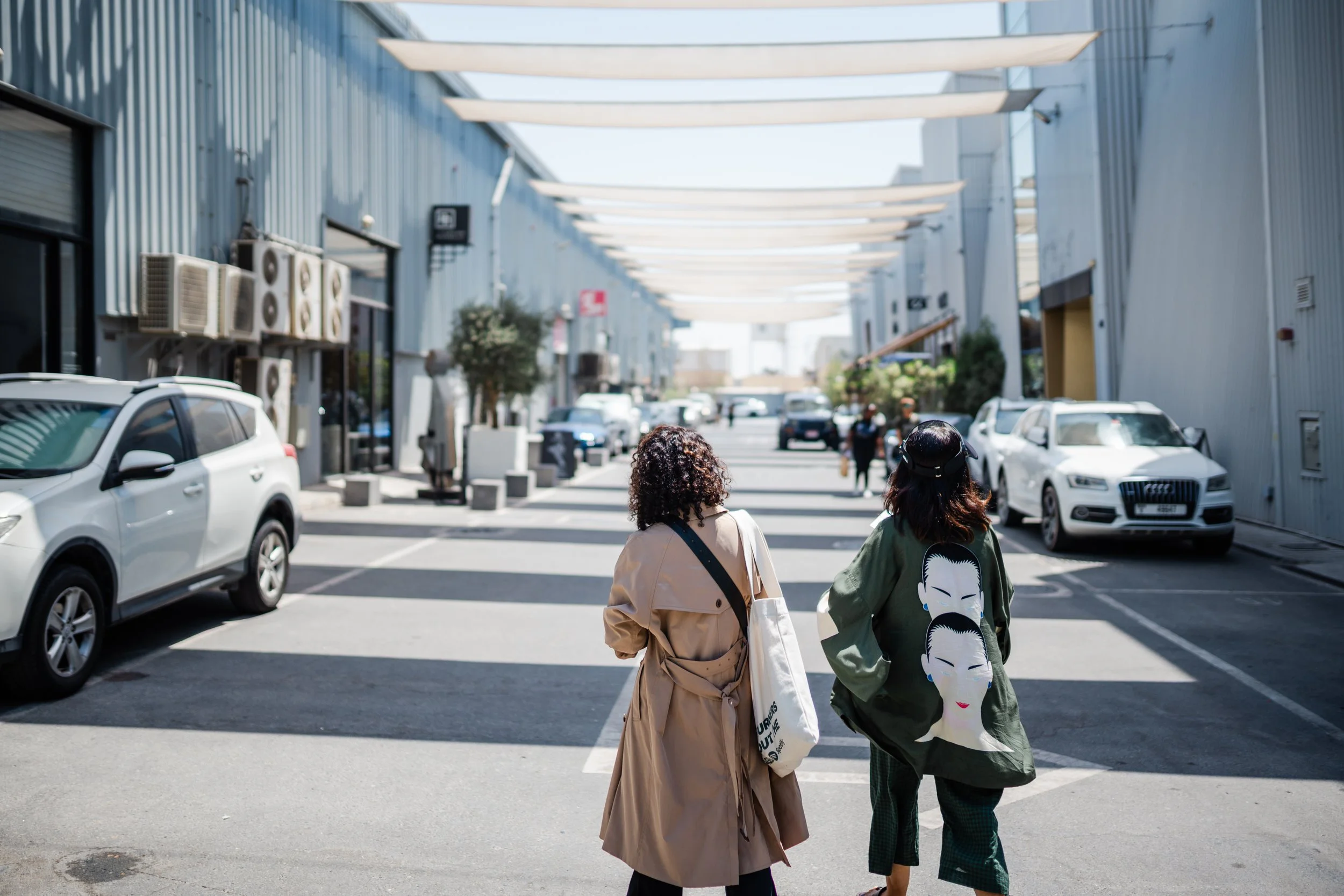
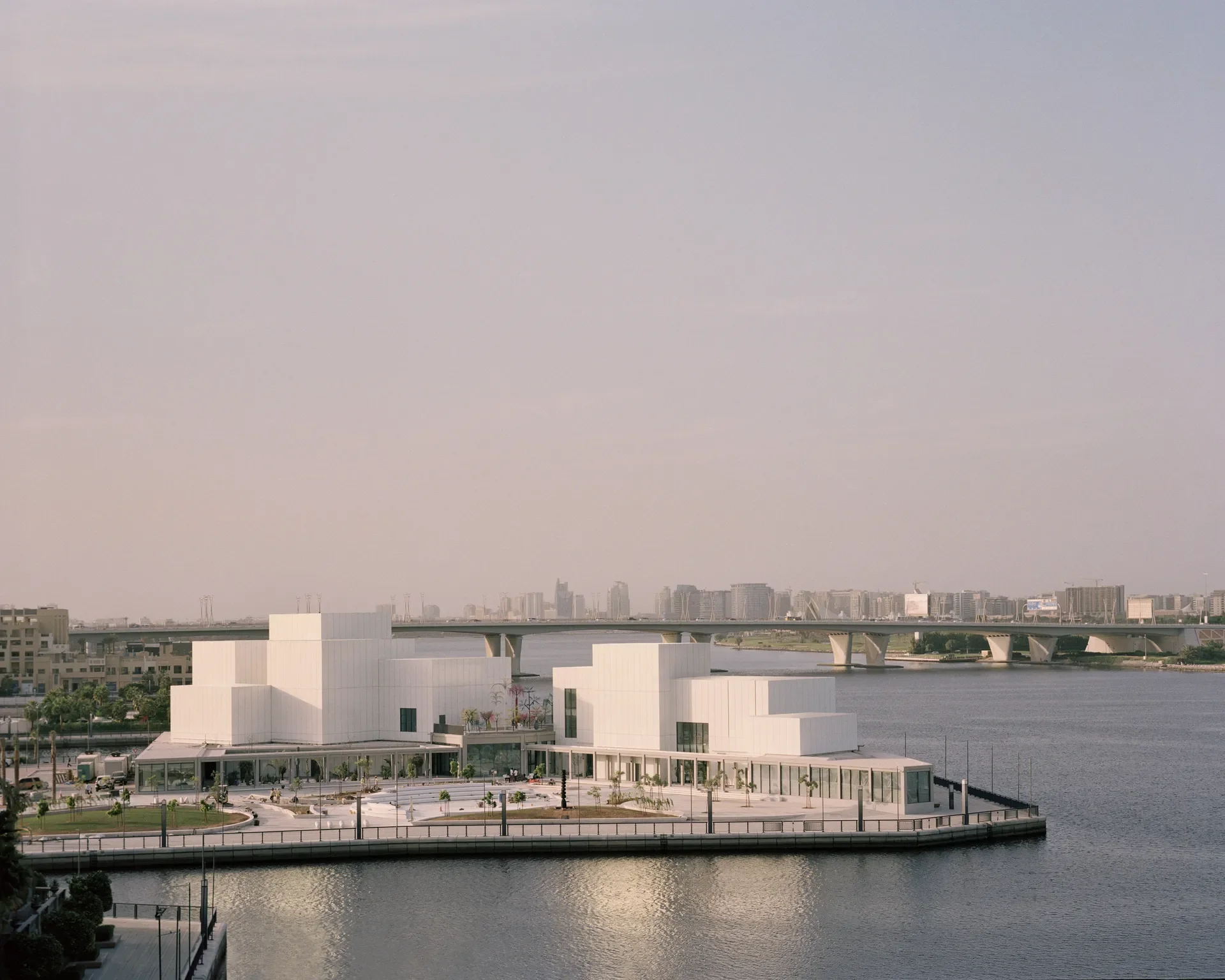
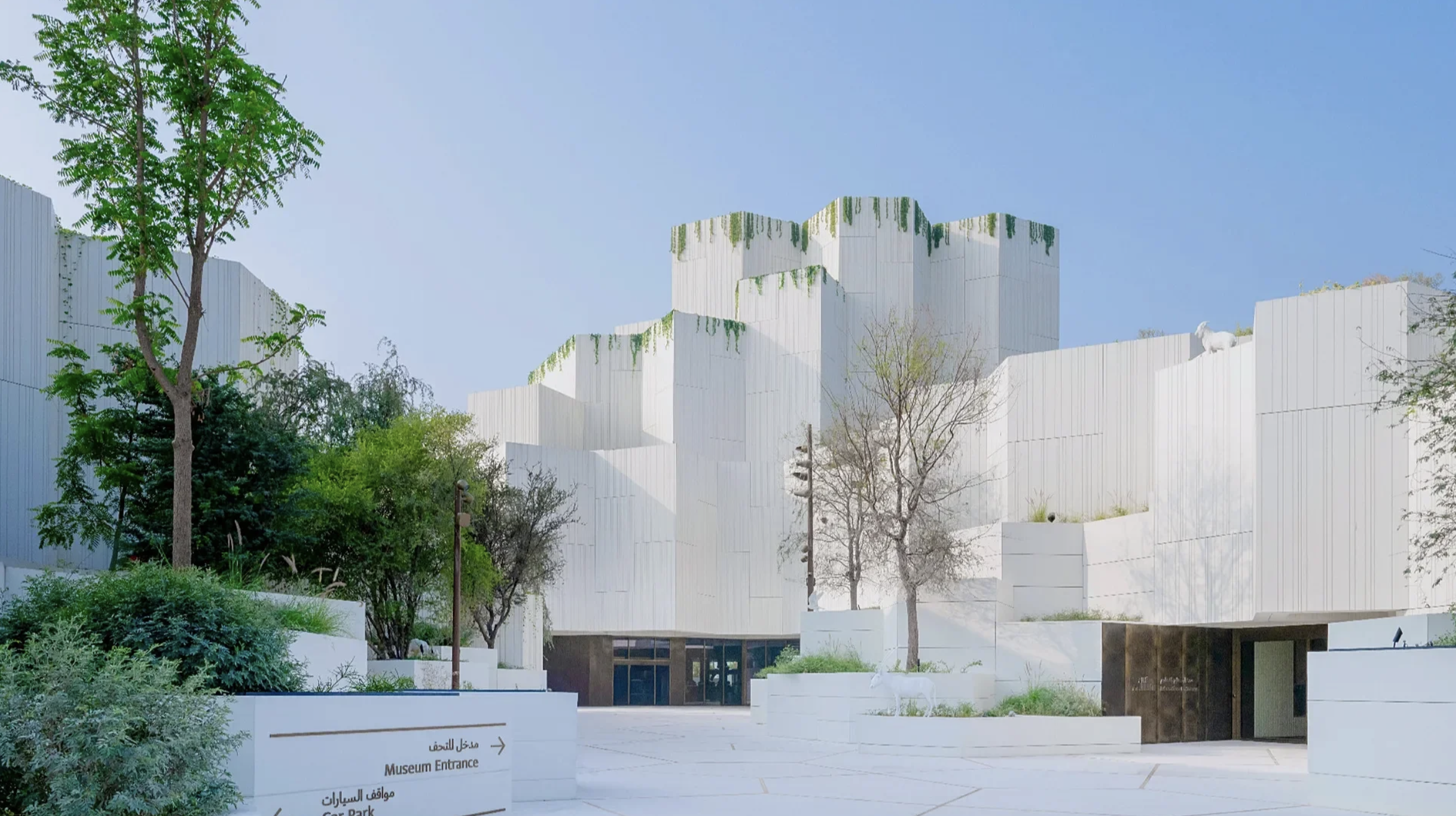
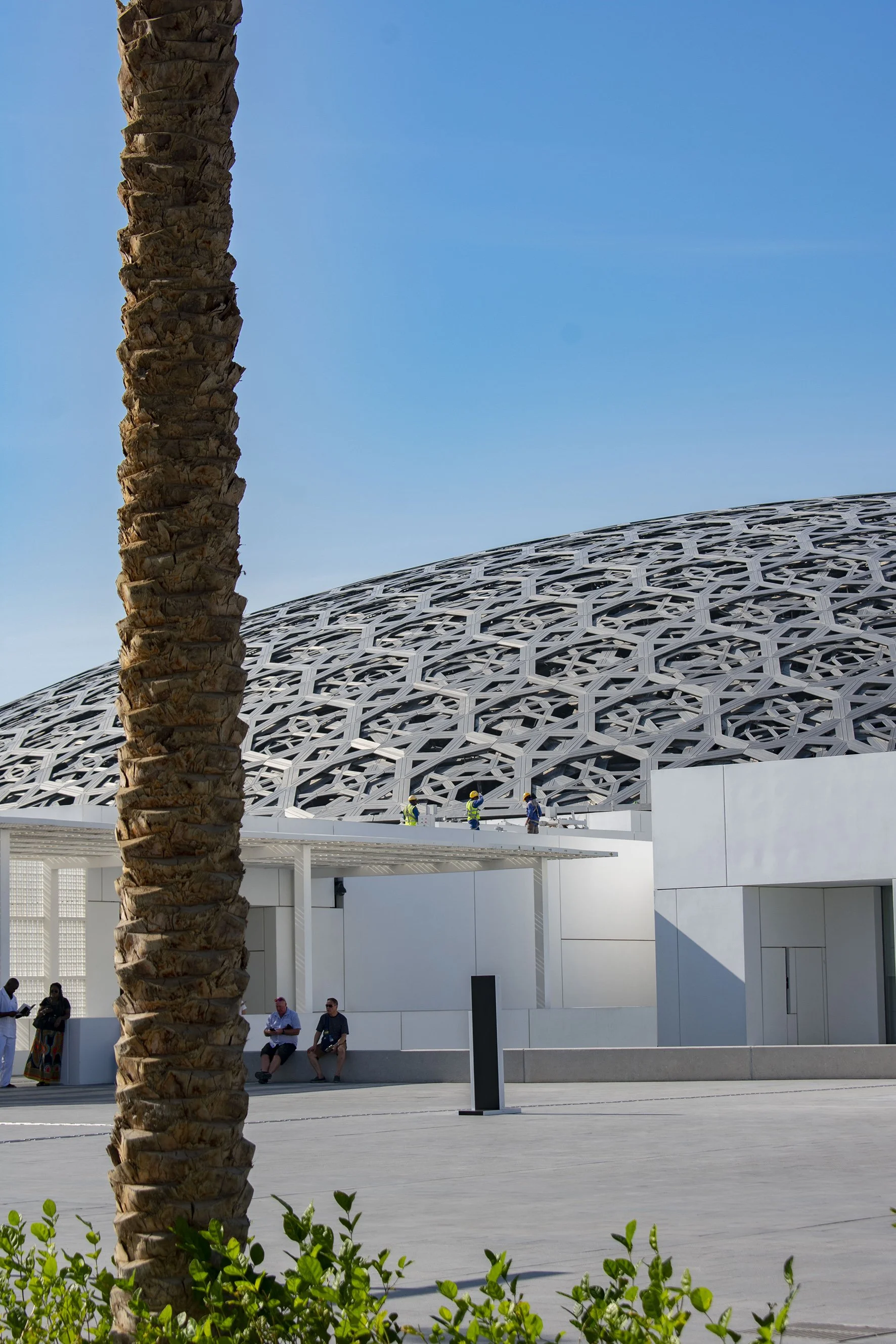
Images top left clockwise: Alserkal Avenue, image courtesy of the Dubai Cultural Authority / Jameel Arts Centre in Dubai, Photography: Rory Gardiner / Natural History Museum Abu Dhabi / Louvre Abu Dhabi
Dubai’s culinary landscape is incredibly diverse. What restaurants or dining experiences do you personally recommend for those wanting to understand the city’s character and culture?
From the cultural scene to the culinary – let me make that transition smoothly. In many ways, art and food are inseparable; sometimes the most memorable art is the one you can taste. Take Krasota Restaurant, for example – an immersive culinary experience in Dubai with three distinct dinner shows that turn dining into performance. Or Zenon Dubai, where curved, wall-sized LED displays allow you to enjoy digital art while you eat.
For more traditional pleasures, there’s Mamabella, a newly opened Italian gem in Downtown, perfect for classic cuisine done exceptionally well. The best lamb chops? Hands down at Babylon, Dubai Mall. For sushi aficionados, Armani/Hashi remains unparalleled. If you’re after experimental Indian cuisine, Tresind Studio pushes boundaries in the most delicious way. And of course, for a truly spectacular afternoon tea, At.mosphere in Burj Khalifa is as much about the view and the experience as it is about the food. In short, the city’s culinary landscape is a reflection of Dubai itself: diverse, ambitious, and occasionally delightfully theatrical.
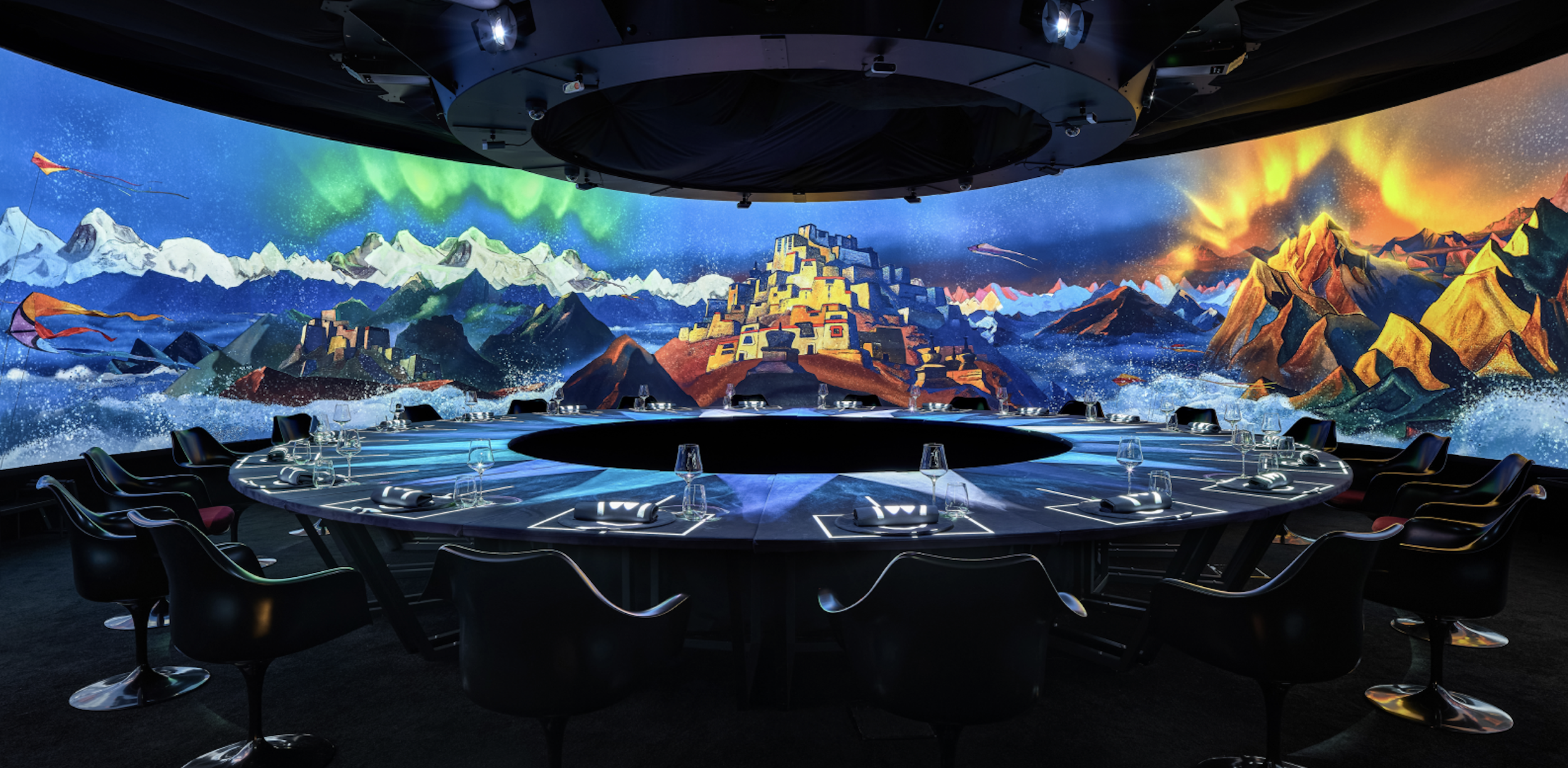
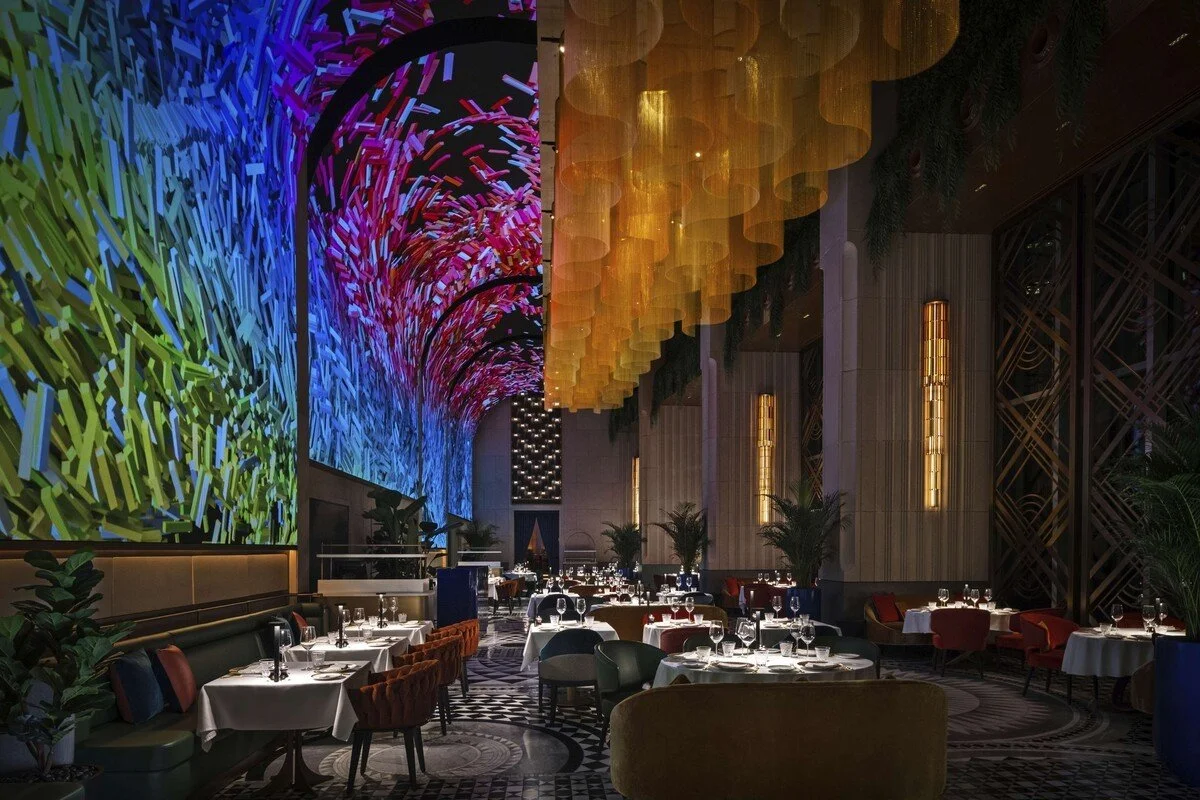
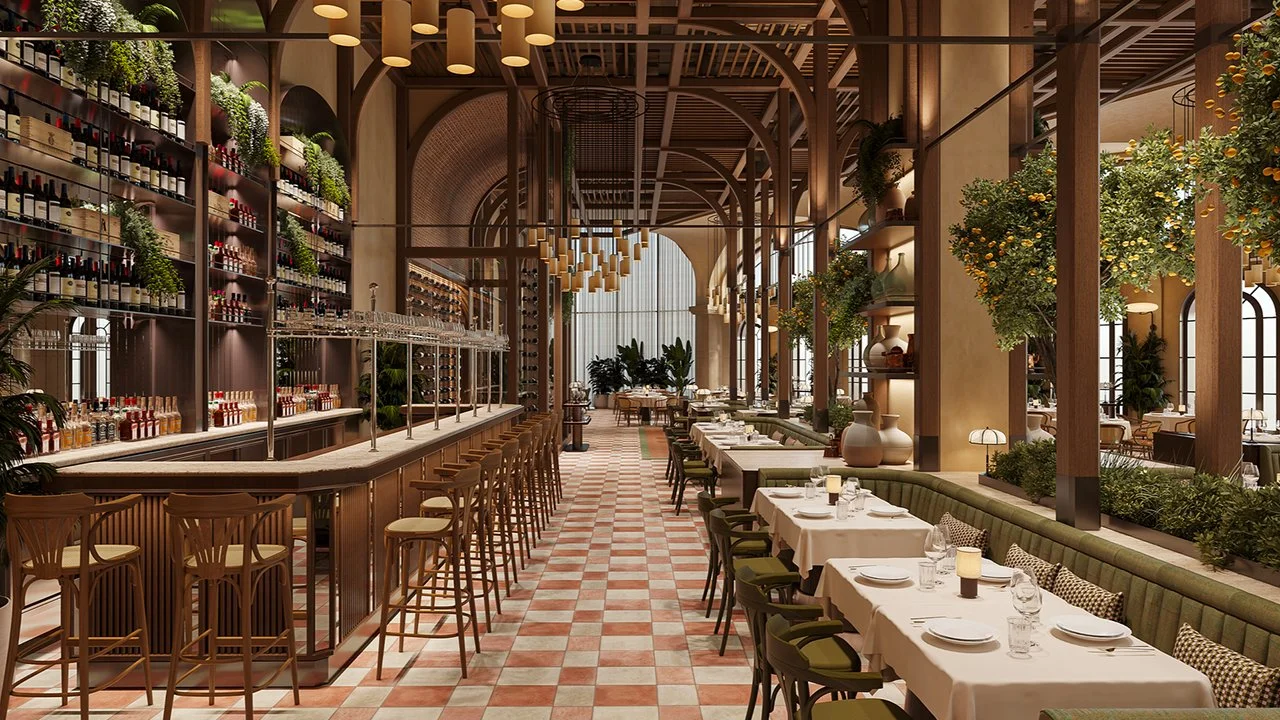
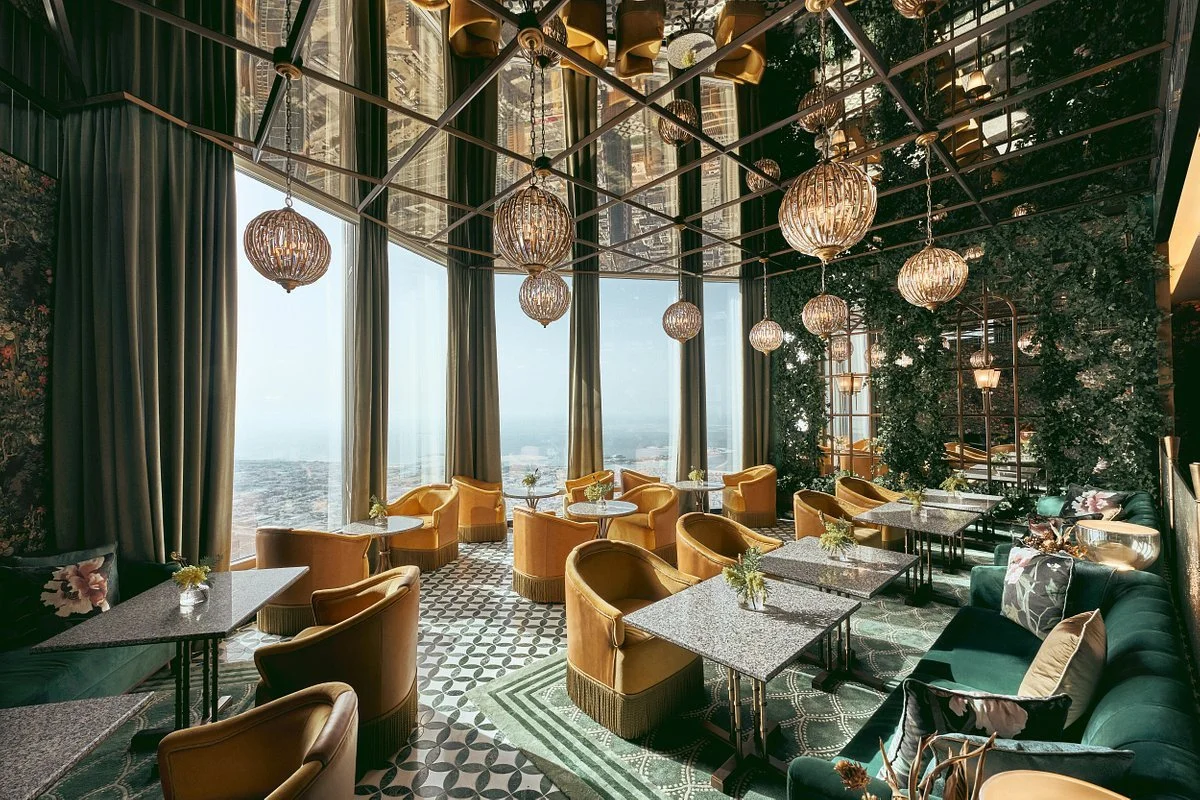
Images top left clockwise: Krasota Restaurant / Zenon Dubai / Mamabella / At.mosphere Burj Khalifa Dubai
Beyond art and food, what must-see experiences or hidden gems around Dubai, Sharjah, Abu Dhabi, or the surrounding region would you encourage people to explore?
Perhaps because of my intense work with people and social media, I tend to seek out quiet places where I can truly have my own time. I love exploring the Kabla region in Sharjah, with its stunning mountains that are perfect for hiking and reflection. Al Ain Oasis feels almost magical – a serene landscape of ancient forts surrounded by lush palm groves. A road trip to Fujairah, the UAE’s northeastern emirate, is utterly cinematic. Its beaches along the Indian Ocean are cooler, cleaner, and strikingly beautiful – a refreshing contrast to the more urban coastlines. Abu Dhabi, too, has its hidden natural treasures; the mangrove forests offer incredible kayaking opportunities through a lush, almost jungle-like landscape. These are the experiences that reveal a different side of the Emirates – one that is peaceful, cinematic, and surprisingly intimate, far from the city lights but rich in character and beauty.
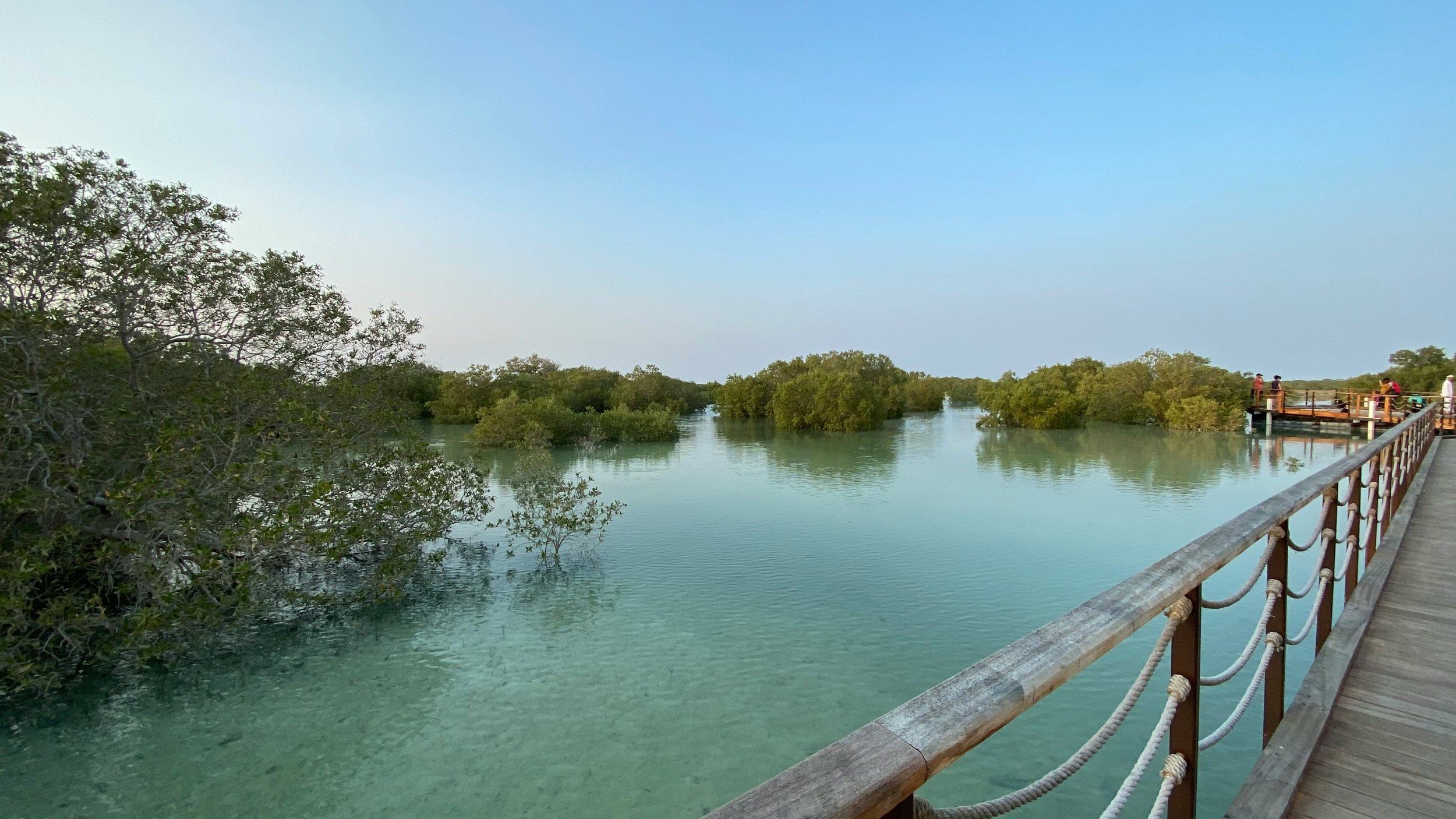
Abu Dhabi Mangroves - Photography: Sam Birouty
Our thanks to Egor for taking the time to share his journey, insights, and thoughtful reflections on art, culture, and the evolving creative landscape of the Middle East. His perspective offers a rare blend of cultural depth and clarity, shedding light on how creativity, identity, and ambition continue to shape the region in meaningful ways. For readers interested in exploring these ideas further, Egor’s book, Dubai: The Art of Wealth, is featured in our Fluxx Reads section, where you can discover more about his work and the conversations it inspires.