In Conversation With: Grimanesa Amorós
Exploring human connection through light-driven, site-specific art installations.
Peruvian-born, New York–based multimedia artist Grimanesa Amorós has built an internationally acclaimed practice rooted in light, time and human connection. Known for her large-scale, site-specific installations, Amorós works at the intersection of art, architecture and technology, creating immersive environments that respond intuitively to their cultural and spatial context.
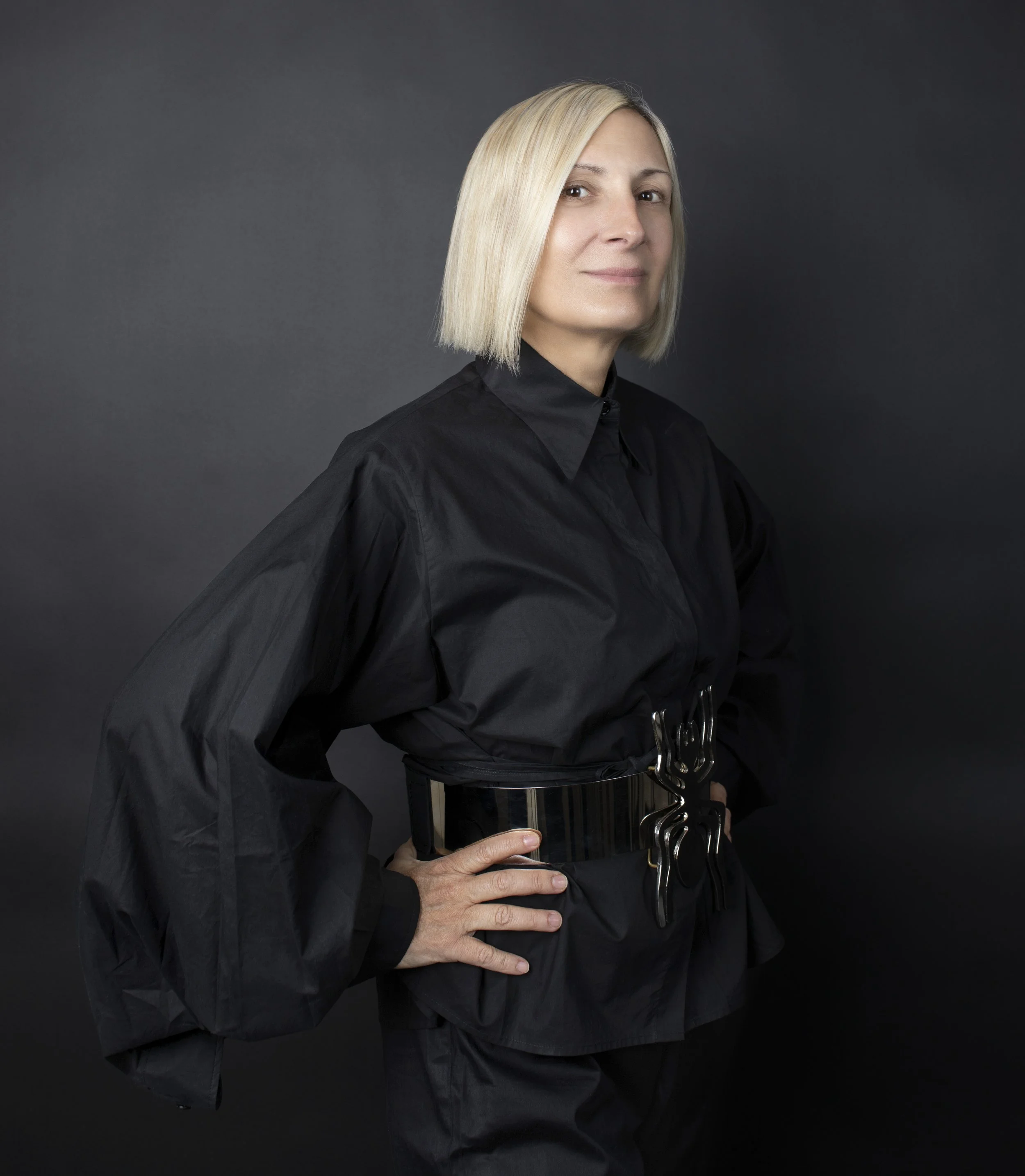
Winter 2026 marks a significant moment in her career. Amorós recently complete RADIANCE, a monumental light takeover devised in collaboration with the LA Philharmonic, transforming the Walt Disney Concert Hall into a living, breathing instrument of light. Shortly after, she unveils PERFECT TIMING, a new commission for Printemps at its New York flagship, the maison’s first collaboration with a light artist positioned at the crossroads of contemporary art, fashion, retail and the rhythm of the city.
Here, Amorós speaks to The Fluxx about translating her language of light across vastly different settings, the growing role of cultural maisons in shaping public experience, travel as creative fuel, and her ongoing commitment to supporting the next generation of artists working across disciplines.

Artist, Grimanesa Amorós, RADIANCE.
Your recent projects span very different contexts, from a full light takeover with the LA Philharmonic to a site-specific commission for Printemps in New York. How do you adapt your language of light, rhythm and time to such distinct architectural and cultural environments, and what draws you to working beyond traditional gallery spaces?
Public projects are complex; they involve numerous components and factors, one of the main ones being the creation of the sequence. For these communal projects, people ask me in advance to show them the sequence, and my answer is always the same: “I don't know; let's wait and see.”
I program on-site; immediately after I finish the lighting sculpture installation, I create in real time, with no instruction manual or presets; it is like painting, except that it combines the physical with the ephemeral.
RADIANCE unfolded in direct dialogue with music, mythology and collective ritual. Now that the project has concluded, what did collaborating so closely with an orchestra reveal to you about light as a shared, emotional experience?
It has always been my dream to create with live music. Light and music are both ephemeral, both evoking a sensory experience beyond just visual. When we connect light and sound, it shifts how we experience and approach the artwork. Setting plays a strong role; music can be more universally understood, while art can be misunderstood. Combining the two creates a dialogue that can be missing between the viewer and the creator.

RADIANCE drew on fire as both a metaphor and a material language. What does it mean for you to “play with fire” creatively, and how do you hope the work encourages audiences to reflect on identity, wisdom and human potential?
Fire has carried meaning across cultures, both as a gift and as a warning. To “play with fire” creatively is to work within that tension and to acknowledge its capacity to transform. Fire gives warmth, light, and knowledge, but it is also to be respected for its danger. That duality is what interests me.
In RADIANCE, fire became a language rather than a literal material: a way to speak about human strength, vulnerability, and potential. The goal was for viewers to recognize their humanistic potential and to reflect on identity as shaped by challenge and earned through experience. Fire reminds us that growth comes with hardship, rarely passive; it is active and dynamic. That self-awareness is where transformation begins.
Grimanesa Amorós, RADIANCE, a monumental light takeover devised in collaboration with the LA Philharmonic, transforming the Walt Disney Concert Hall.
PERFECT TIMING marks Printemps’ first collaboration with a light artist, positioned within a commercial yet highly public setting. How did you approach notions of pace, movement and stillness in this environment and what role do you believe maisons like Printemps can play in shaping culturally engaged, experiential cities?
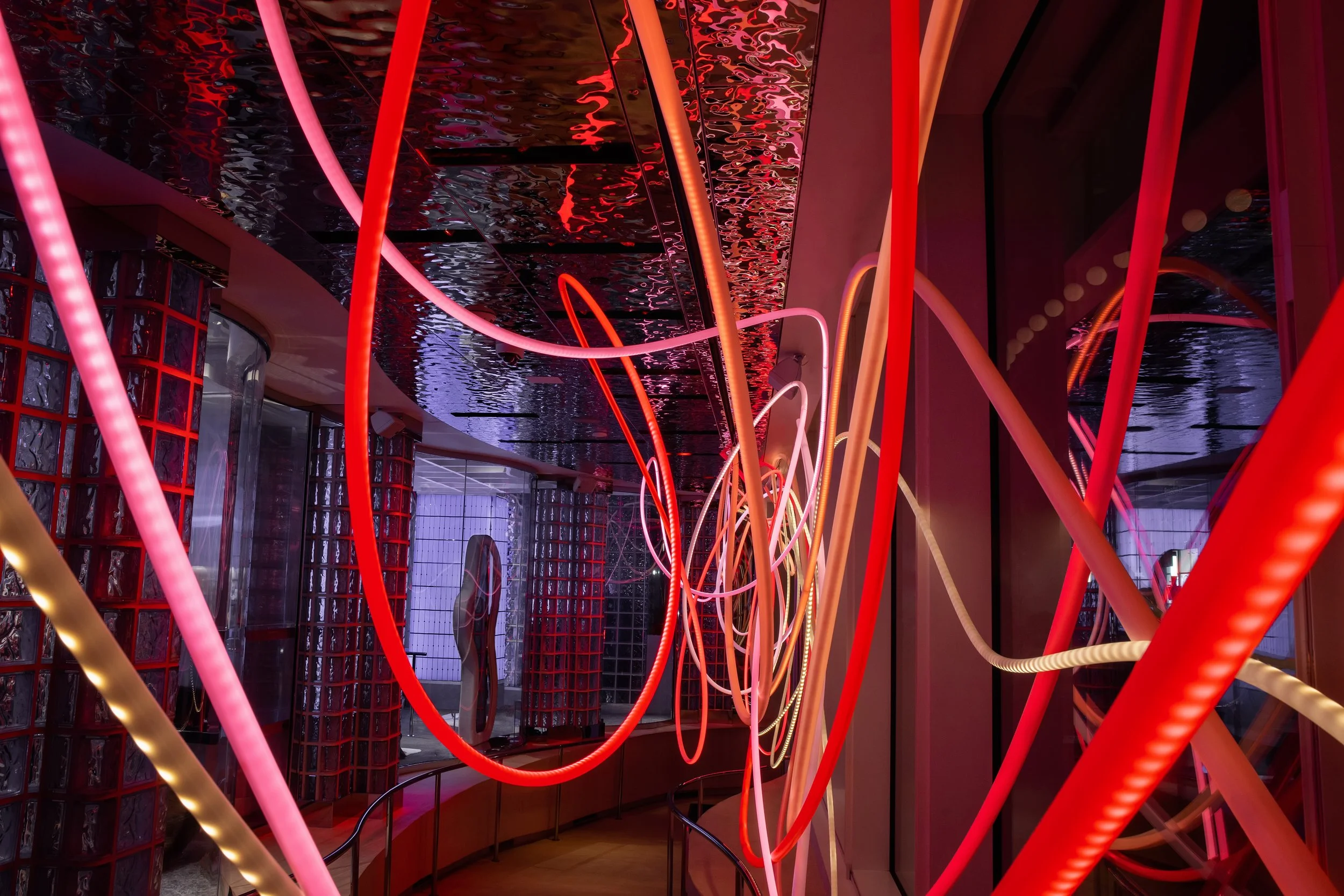
As I mentioned earlier, all my sequencing is done and created onsite; it is part of the installation process. The great part of doing this is that I can get a feel for the space and its energy, and study how the space transforms from day to night and how it uses natural light.
Wall Street is active and fast-paced; you either missed it or made it. It’s these anecdotes that inform the space's personality. They can attract a new clientele and intrigue the current. Being publicly accessible, they can have new conversations with art.

Photography, Grimanesa Amorós, PERFECT TIMING, Printemps, New York.

Alongside your practice, you are deeply committed to mentoring and inspiring young creatives working across art, architecture and technology. In 2026, what responsibility do established artists have when it comes to access, education and encouragement and how do you hope your work contributes to that dialogue?
It is an artist's responsibility to inspire creativity, to say and create something, and to make people think. For public art, especially, it is important for the art to connect with the passersby who might not necessarily see it as their space. My artwork is not just for the art world but also for the engineer, the doorman, in this case, the New Yorker on the go, or a tourist exploring. It has a conceptual reason for its creation, but it is also captivating beyond that. It is a movement of light, a work that causes someone to go “huh, what’s that?” Light can envelop the viewer.
Take a sunset, for example: we all enjoy light in some way; we all understand it; the magic is for everyone. I say it is ephemeral.

I always say that my goal with my art is to inspire others to be more creative in their daily lives. What does that mean? It means that art has this ability to push limits or show others new ways to see the world and our own realities. In the volatile world we live in, with looming war and destruction every day, expression is more important than ever. I encourage people to stop, think, reflect, and experience something familiar in a new way.
All my lighting sculptures are programmed note by note to give it an almost human quality, something we can connect with; that is the point of art: to connect us. That is our role as artists: to provide accessibility. I will continue to share the light :)
Travel is often a source of creative renewal. Are there destinations you consistently return to, or recent discoveries, you would recommend to our readers seeking culture, design and atmosphere?
Yes. Much of my travel is anchored in places I return to regularly for work and personal life. Cities like Hong Kong draw me back for many reasons, while Italy and France are constants for me; my eye doctor is in HK, and my dentist is in Italy. London and Dubai are also cities I frequently return to through ongoing projects. Peru, where I was born and where my family resides, is always a grounding point.
That said, when I am seeking true creative renewal, I intentionally choose places I have never been before, destinations where nature is undeniable, raw, and incredibly beautiful. Landscapes such as the deserts of Namibia or Tunisia offer a different kind of clarity and inspiration. In those environments, creativity feels expansive, quiet, and deeply renewed.
Grimanesa Amorós PERFECT TIMING, marks Printemps’ first collaboration with a light artist.
Is there a restaurant or cocktail bar whose design, mood or sense of place you particularly admire and return to?
I really like Titsou at the Fouquet Hotel in NYC. Small and intimate space, especially during the week, hidden behind a wall, and they make my favourite drink to perfection, a Negroni Sbagliato. It is quite maximalist, but it still remains controlled, much like my artwork, encapsulating and integrating with a space, but at the same time has its own individuality.
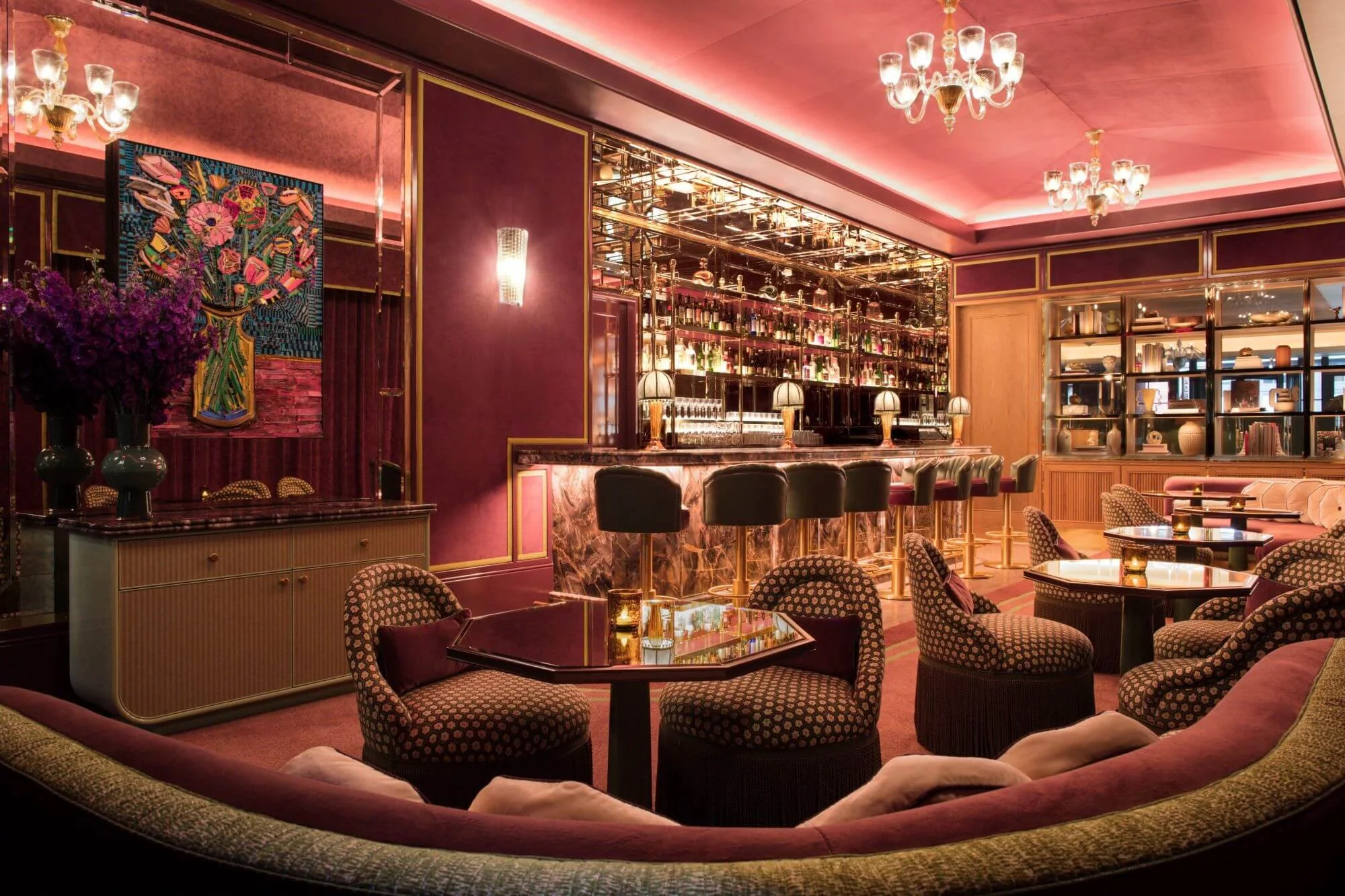
Photography, Titsu Bar, Fouquet Hotel, New York.
As someone working at the intersection of art, technology and human experience: what would you like to see more of in the design world, and what would you like to see less of?
Fewer sensors and panels, and more physical presence. We are focused on our screens and establishing relationships that way. I think there will be a movement and a shift toward the visual and tactile physicality and impact of art. Artists become the middlemen between technology and human experience, and between art and advancement. We should, of course, not become prehistoric by not using technology like AI, but use it as a tool to connect all generations who are increasingly lost in translation.