
In conversation with: Ilene Shaw, NYCxDesign
The Executive Director of NYCxDESIGN reflects on leadership, global collaboration and why design remains one of the most powerful civic forces shaping how we live, build and connect in 2026.
As the global design calendar continues to evolve, few figures have influenced its direction as profoundly as Ilene Shaw. From co-developing the International Contemporary Furniture Fair (ICFF) during its formative years to founding the public-facing Design Pavilion, Shaw has spent decades championing design not only as an industry, but as a cultural and civic language.
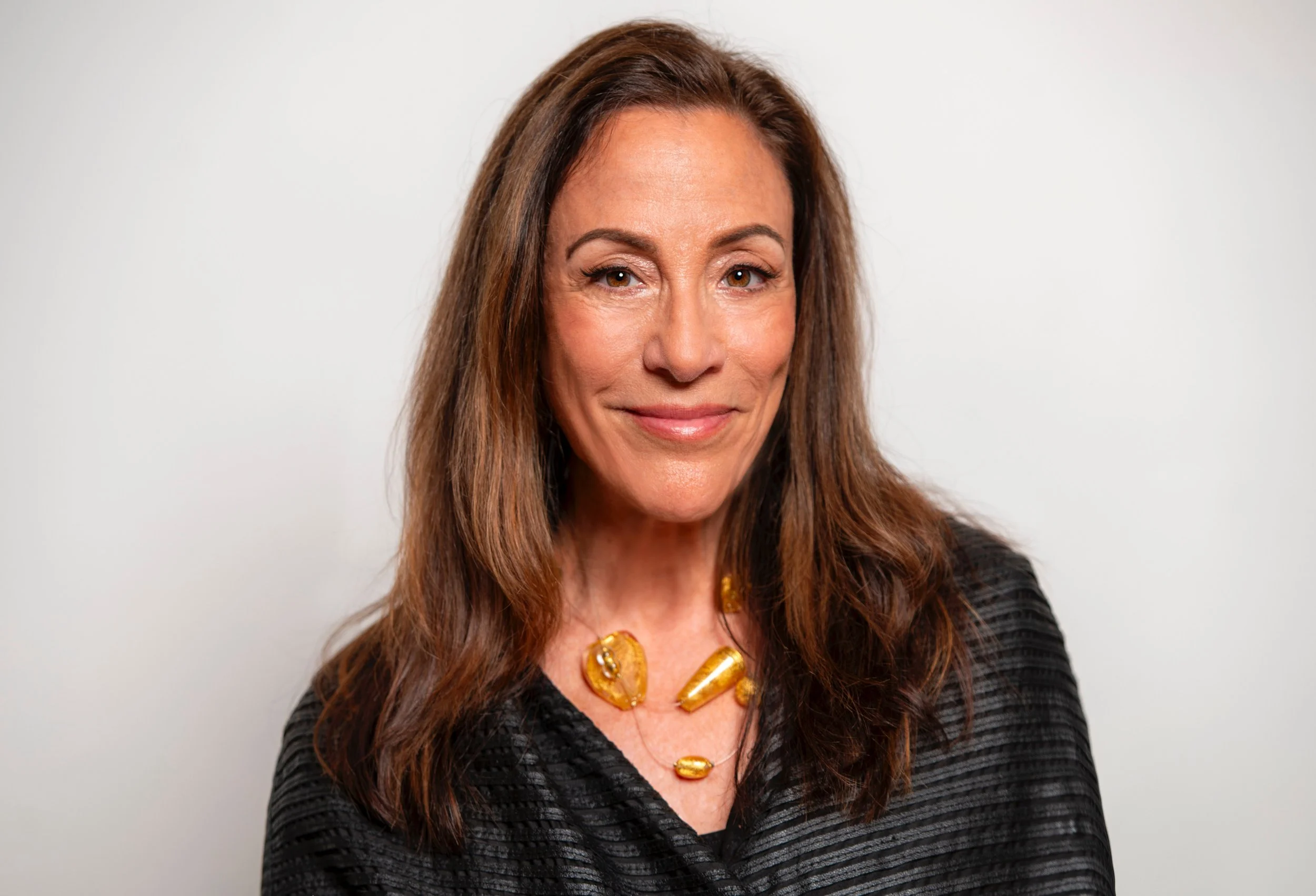
Ilene Shaw, Executive Director of NYCxDESIGN.
Today, as Executive Director of NYCxDESIGN, she steers one of the world’s most dynamic citywide festivals, a platform that reflects New York’s uniquely interdisciplinary design ecosystem where architecture, public space, technology, craft and community converge. The 2026 theme, Design Connects Us, arrives at a moment of global recalibration, underscoring design’s role as both a creative discipline and a tool for resilience, equity and shared progress.
With New York City continuing to assert itself as a global capital of experimentation and exchange, NYCxDESIGN has become a meeting point for international studios, emerging talent and established voices alike, including a strong presence from British designers and architects helping shape the city’s evolving skyline and cultural dialogue.
In this conversation with The Fluxx, Shaw reflects on a lifetime spent building platforms for creativity, the responsibility of design as a social force, and why optimism, collaboration and human-centred thinking remain essential to the future of cities.
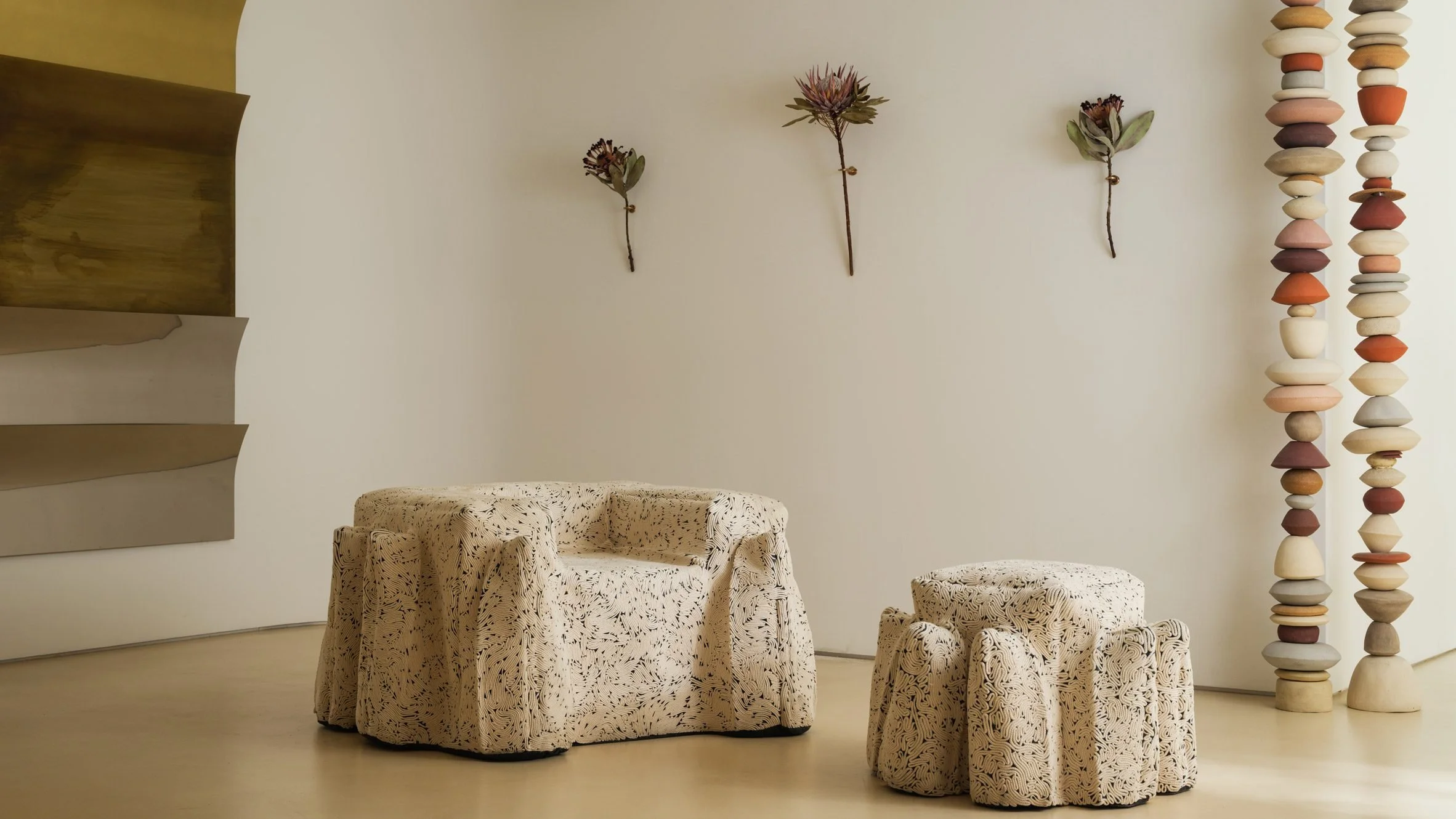


Photography left, NYCxDesignx Souvenir by Boym Partners and Cool Hunting, 2025. Right, Hug Chair launch by Kouros Maghsoudi, 2025 show.
You’ve played a formative role in shaping some of the world’s most influential design platforms, from co-developing ICFF in its formative decade to founding the public facing Design Pavilion. Looking back, what has a lifetime working in design taught you about creativity, leadership and longevity?
Design is inherently hopeful. It carries the promise that something, a place, an object, a system — can be improved. At its core, design teaches problem-solving and forward thinking. Designers imagine what does not yet exist, and leadership requires that same capacity, a vision clear and compelling enough to move toward.Longevity comes from authenticity and quality. When the work is grounded in integrity and purpose, it sustains itself over time.
Yet my earliest and most lasting lessons were rooted in community. Design, at its best, builds good citizens. It cultivates empathy, responsibility, and concern for humanity. The design process is a search for truth — a deep listening to human need in order to solve real challenges. It depends on collaboration, deep thought, and shared purpose. Creativity may ignite the work, but collaboration sustains it. That is what ensures relevance across decades.
NYCxDESIGN has always reflected the cultural pulse of New York rather than a single aesthetic. How would you describe the overarching spirit or ambition of this year’s NYCxDESIGN Festival, and what feels different about 2026?
The world has shifted dramatically. We are living through instability and the redistribution of power, and that reality shapes 2026. Nothing feels entirely the same. And yet New York City remains resilient and fast-moving. Change has always defined us. The election of our new mayor signals that the city is ready to meet challenges head-on.
The heart of New York lies in its collaboration between cultures, its respect for creative thinking, and its embrace of diversity and unity. The 2026 Festival theme — Design Connects Us — reflects this spirit. It acknowledges that connection is not optional; it is essential.
Support for the Festival continues to grow because people are seeking optimism and forward momentum. New York’s creative community thrives on energy, boldness, and the willingness to move beyond tradition. That remains unchanged.
New York is a city where design intersects with policy, public space and lived experience. How do you see the role of design evolving as a civic and social force in the city right now?
Design is, by nature, a civic and social force. It shapes how we live, gather, and experience our environment. With Mayor Mamdani’s ambitious goals around quality of life and affordability, design thinking becomes essential. Addressing affordable housing, sustainability, and livability requires trained aesthetic judgment, thoughtful planning, and innovative problem-solving. Good design elevates daily life at every income level and enables these goals to be achieved with lasting impact.
Design is not a luxury. It is infrastructure for dignity, equity, and resilience. As we emphasized in the 2025 Festival, design is for everyone. That belief continues to guide us. It is not aspirational rhetoric; it is a civic imperative. We believe in the power of design.
As of 2026, what does “New York design” represent today? Is there a particular mindset, energy or value system you see consistently coming through the work, including in emerging and established talent?
New York design represents diversity of disciplines and perspectives. The city is home to more architects and designers than any other in the world. That concentration of talent shapes the city’s design identity, and many of the world’s most recognized designers and architects maintain studios here.
The value of New York City design lies in its people. The mindset is energetic, experimental, and collaborative. Through strong professional associations and the Festival itself, we encourage openness and exchange. The work coming out of New York is bold and willing to take risks. It is not bound by tradition. There is a sense of exploration — almost youthful curiosity — that continues to define the city’s creative output.
At the same time, affordability pressures affect our creative community deeply. Supporting designers so they can continue to live and work here is essential to preserving this identity.
NYCxDESIGN has increasingly become a global meeting point, welcoming international brands and studios alongside New York’s own creative community. What role do international voices play in shaping the festival today and how do you see British design brands contributing to the dialogue and energy of NYCxDESIGN?
New York is inherently international. Even in times when political relationships feel strained, the creative community remains interconnected.International dialogue is more vital than ever. Even as geopolitical tensions strain relationships globally, New York remains proudly international. Within the creative industry, our shared language transcends borders.
Design connects us, culturally, intellectually, and emotionally. Each international partner brings a unique perspective shaped by history and tradition. The exchange of ideas strengthens our collective ability to create environments that are empathetic, functional, beautiful, and sustainable.
British design continues to make a powerful contribution. Rolls-Royce, based in Manhattan’s stylish Meatpacking District, represents heritage and precision craftsmanship. Lee Broom, participating in our 2026 exhibition SHINE, brings a distinctly contemporary, sculptural voice to lighting design. Foster + Partners are reshaping the skyline with the new JP Morgan Chase building. Heatherwick Studio’s projects — Little Island, The Lantern House, The Vessel, have already become part of New York’s architectural narrative.
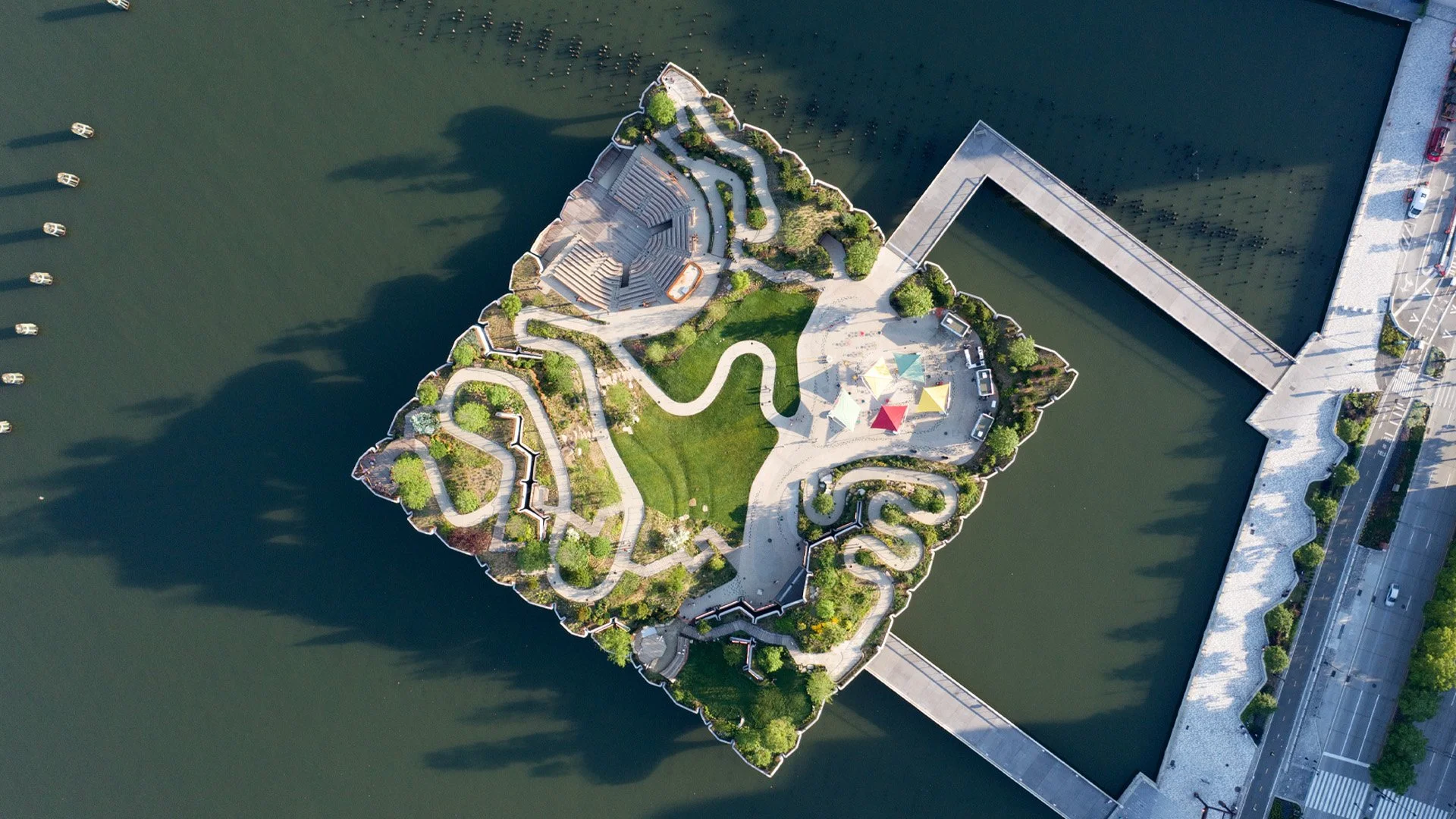
Photography, New York Little Island from above, Heatherwick Studio.
ArtsThread, a global digital platform based in London that connects emerging art and design students and graduates with industry opportunities, competitions, and employers worldwide, helps us align with emerging talent across disciplines. These contributions demonstrate how British design and designers energize New York’s architectural and cultural landscape.
Are there particular design moments including exhibitions, objects, installations or conversations, that have stayed with you over the years and helped define how you see design today?
Many defining moments have shaped my perspective. My first visit to Salone del Mobile decades ago transformed my understanding of what a design platform could be. It inspired the creation of ICFF, because I believed New York needed a contemporary marketplace for the home.
Hearing Michael Graves speak about his teapot for Target reinforced the belief that good design must be accessible. Touring Montana’s Tippet Rise with architect Francis Kéré revealed the richness that comes from cultural exchange. More recently, speaking with Nobel Laureates in Physics about the “beginning of light” and the “expansion of the universe” expanded my view of creativity itself.
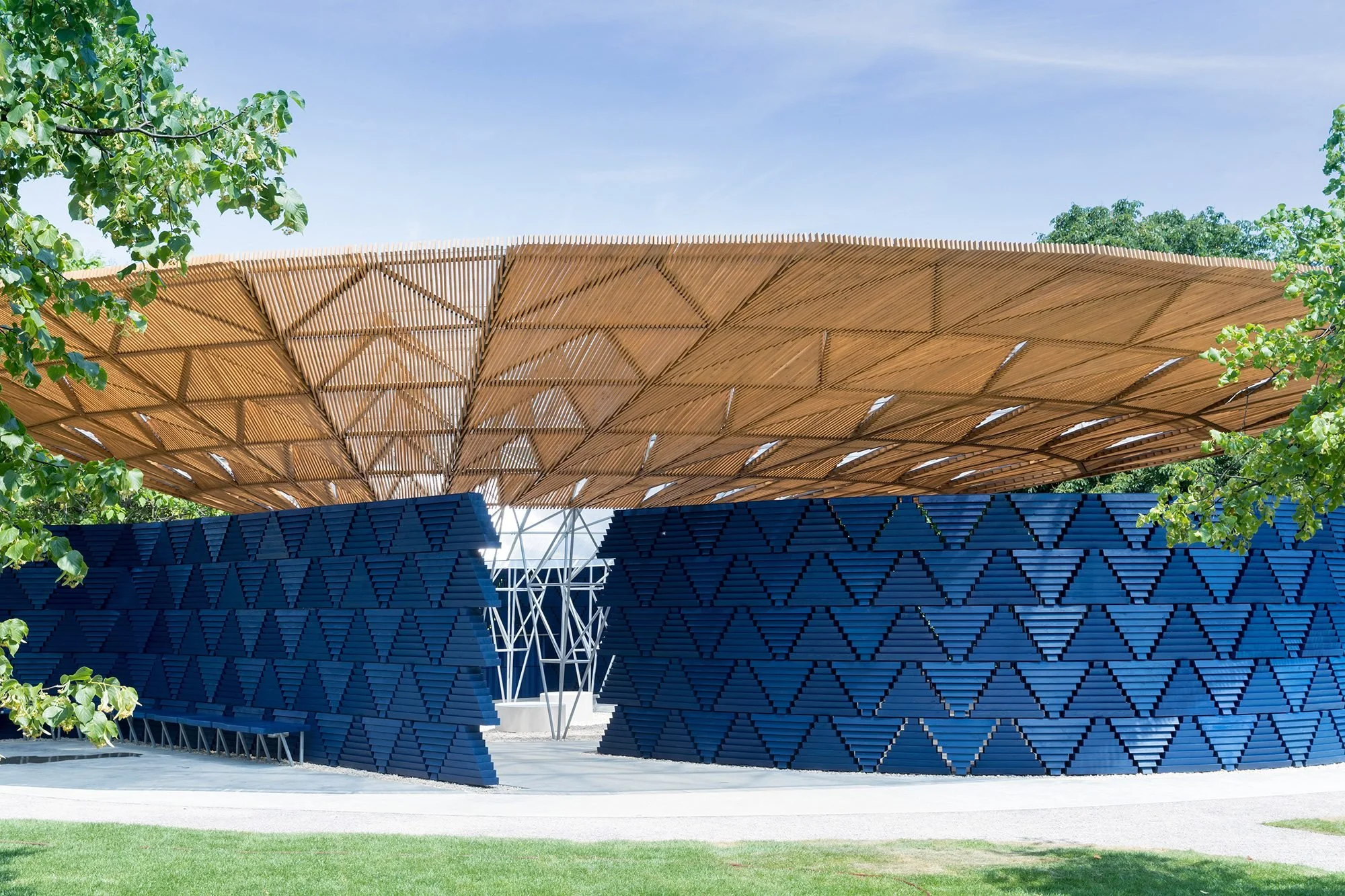
Serpentine Pavilion 2017, designed by Francis Kéré. © Kéré Architecture, Photograph © 2017 Iwan Baan.
And there are intimate moments, overhearing a mother telling her child at the first Design Pavilion, “Honey, these chairs are designed.” Or walking through a space with its architect, understanding the intention behind every decision, with Elizabeth Diller, Robert Stern, and David Rockwell. Design has moved me to tears. It can overwhelm the senses, awaken memory, and alter perception. Those experiences continue to guide and inform me.
Travel is often a source of creative renewal. Are there any destinations you consistently return to, or recent discoveries you would recommend to our readers seeking culture, design and atmosphere?
Milan, Venice, London and Paris remain perennial sources of inspiration, layered with history yet constantly evolving. Copenhagen demonstrates how design can be seamlessly integrated into civic life, and I admire their devotion to sustainability and the environment. Medellín, Colombia, reveals how architecture and urban planning can transform social infrastructure while preserving natural forestry and honoring craft and natural resources.
In each of these cities, design is not separate from daily life; it shapes it. Beyond these cities lies a world of inspiration, each destination offering its own distinct treasures to discover.
Beyond travel, are there any restaurants or cocktail bars in New York or elsewhere, whose atmosphere, materiality or sense of style you find especially compelling, spaces you return to again and again?
At this moment, I recommend The View in Times Square, a Danny Meyer restaurant designed by David Rockwell — a remarkable reimagining of a classic New York experience.Printemps offers one of the most sensuous, immersive, and meticulously detailed retail environments I have seen in years.
And the Perelman Performing Arts Center, designed by REX Architects, is an extraordinary example of contemporary civic architecture done with elegance and restraint.

The View in Times Square designed by David Rockwell.
What would you like to see more of in the design world?
I would like to see more designers recognized as household names. More visibility for architects and designers as cultural leaders. And more Chief Design Officer roles within corporate America.More sustainability in materials and practice. Greater government support for significant design initiatives. More green parks, public gathering spaces, public art, and installations.
Stronger public awareness of design’s impact. Earlier exposure in K–12 education to creative design career paths. A design community that fully reflects New York’s diversity. More courage to take risks and more solutions.
And finally, what would you like to see less of in the design world?
I would like to see less devaluation of the design process. Less environmental ignorance. Less corporate denial of design’s strategic importance. Less “value engineering” that erodes integrity.
Fewer compromises that weaken creative vision. And less fear of AI — instead, a thoughtful integration of new tools that enhance rather than diminish human creativity.
Less environmental ignorance. Less corporate denial of design’s strategic importance. Less “value engineering” that erodes integrity. Fewer compromises that weaken creative vision. And less fear of AI — instead, a thoughtful integration of new tools that enhance rather than diminish human creativity.