The Spotify Listening Lounge: Inside London’s New Era of Design-Led, Deep Listening
A bespoke listening room by Spotify, Cake Architecture and Friendly Pressure signals a cultural shift from passive streaming to immersive, communal sound.
London’s cultural landscape is entering a new phase, one defined less by volume and velocity, and more by intention. With the unveiling of the Spotify Listening Lounge, a purpose-built acoustic space at its London headquarters, Spotify is placing design, sound and experience at the centre of how we engage with music today.
This is not simply a listening room. It is a statement on the future of music consumption, where how you listen becomes as important as what you listen to.
Photography courtesy of Spotify.
The Rise of Listening Rooms, From Tokyo to London
Listening culture is not new. Its origins can be traced back to Tokyo’s intimate vinyl bars, where sound systems were treated with reverence and listening was a shared ritual rather than background noise. Today, that philosophy is re-emerging globally, evolving into a new category of design-led listening spaces that sit somewhere between club, gallery and living room.
In London, this movement has quietly taken hold. Spaces such as SOMA in Soho and A Bar With Shapes for a Name have already redefined how music, architecture and atmosphere intersect. The Spotify Listening Lounge builds on this momentum, translating an underground cultural language into a more refined, accessible environment.
Designing Sound as Architecture

At the heart of the project is a collaboration between Cake Architecture and Friendly Pressure, two studios shaping the future of sound-led environments.
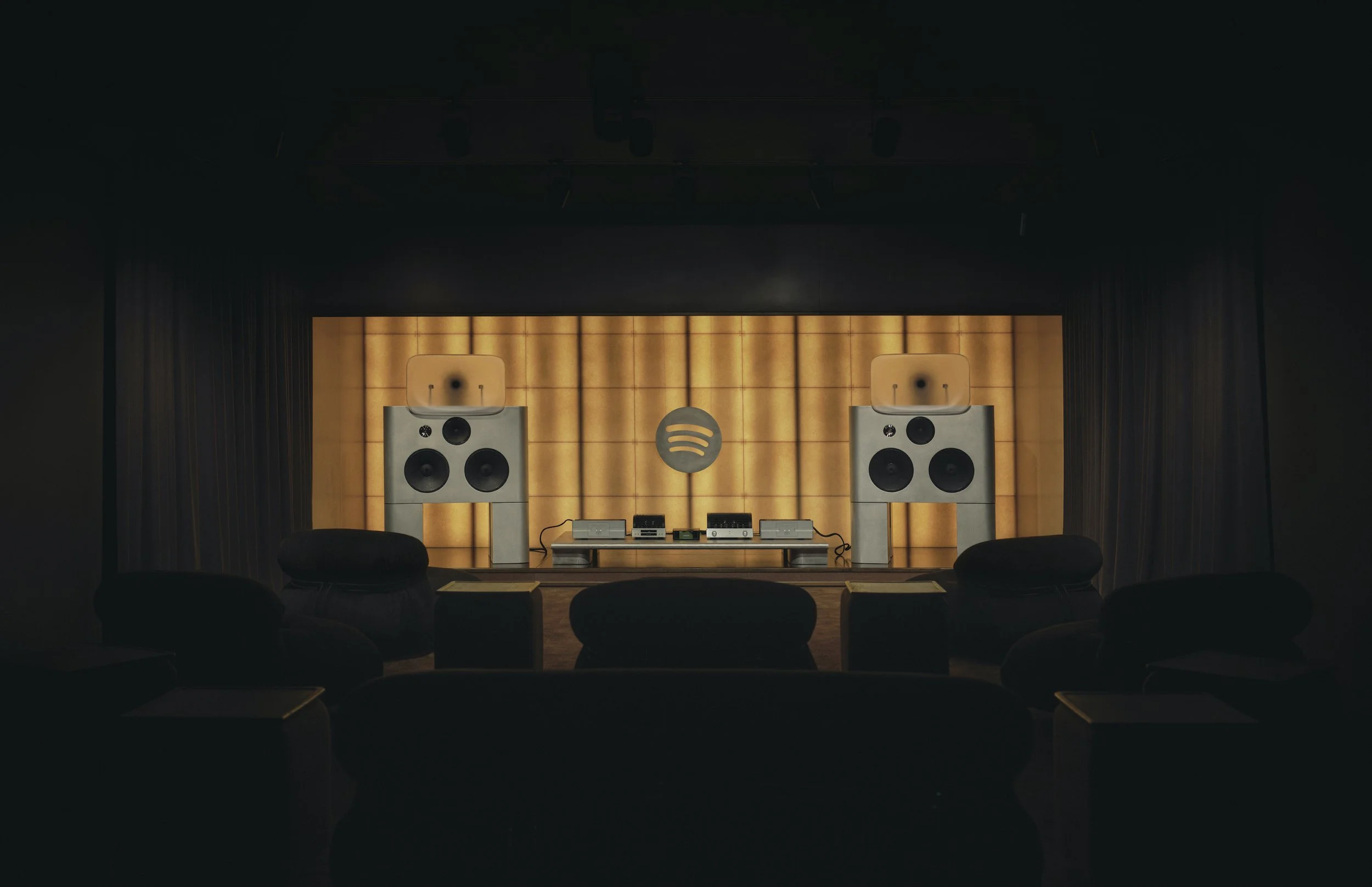
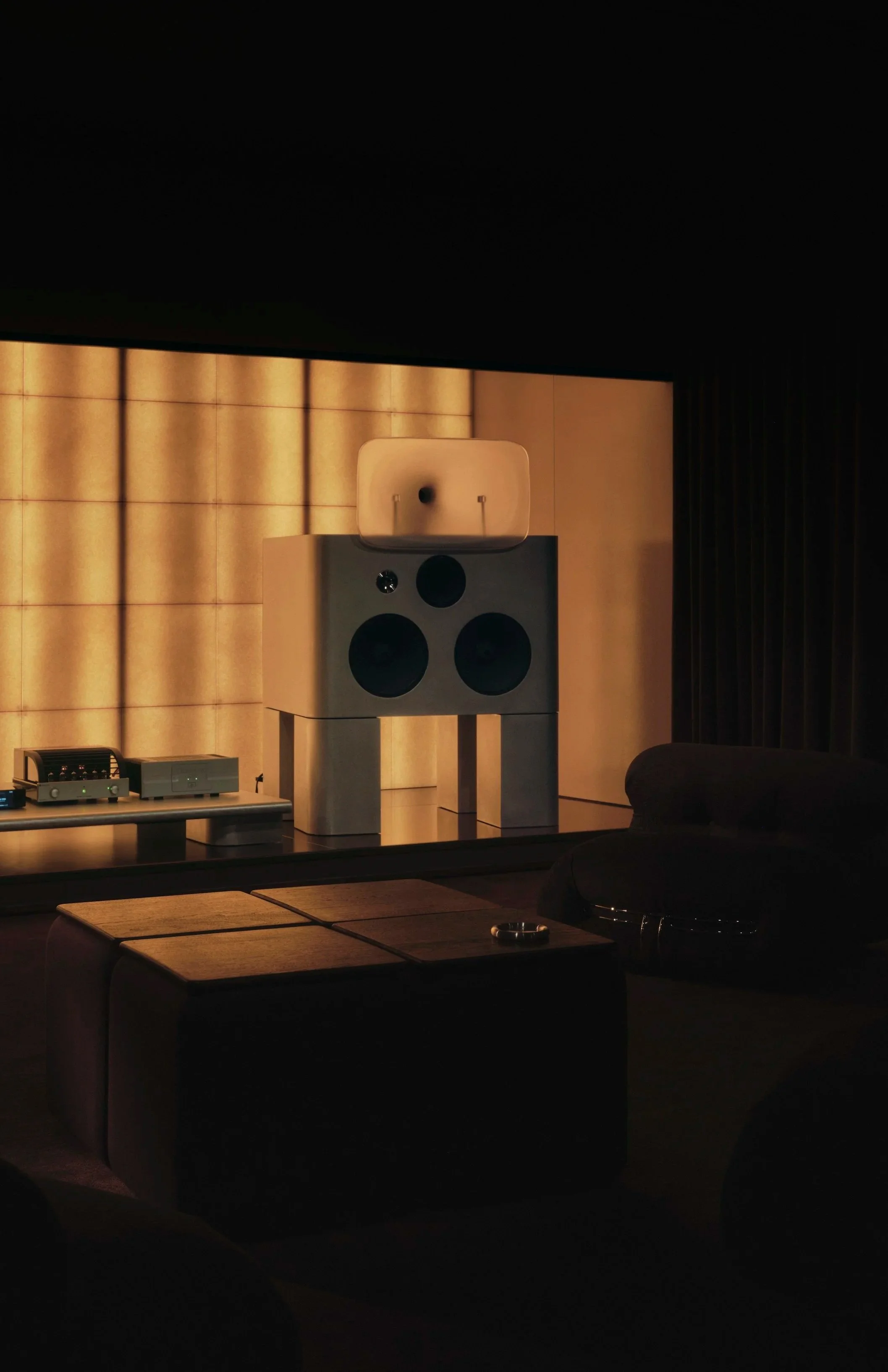
The space itself has been engineered from the ground up, where the sound system becomes the architecture. Every surface, material and proportion has been carefully considered to eliminate distraction and foreground the music. Guests move through a sequence of spaces defined by warm lighting, slate flooring and tactile finishes, before entering a main room where visual elements recede, and sound takes precedence.
The acoustic detailing is precise. Walls are calibrated to disperse frequencies and prevent reverberation, developed in collaboration with acoustician Ethan Bordeau using Kvadrat’s systems. The result is a room that feels almost invisible, where the focus shifts entirely to the listening experience.
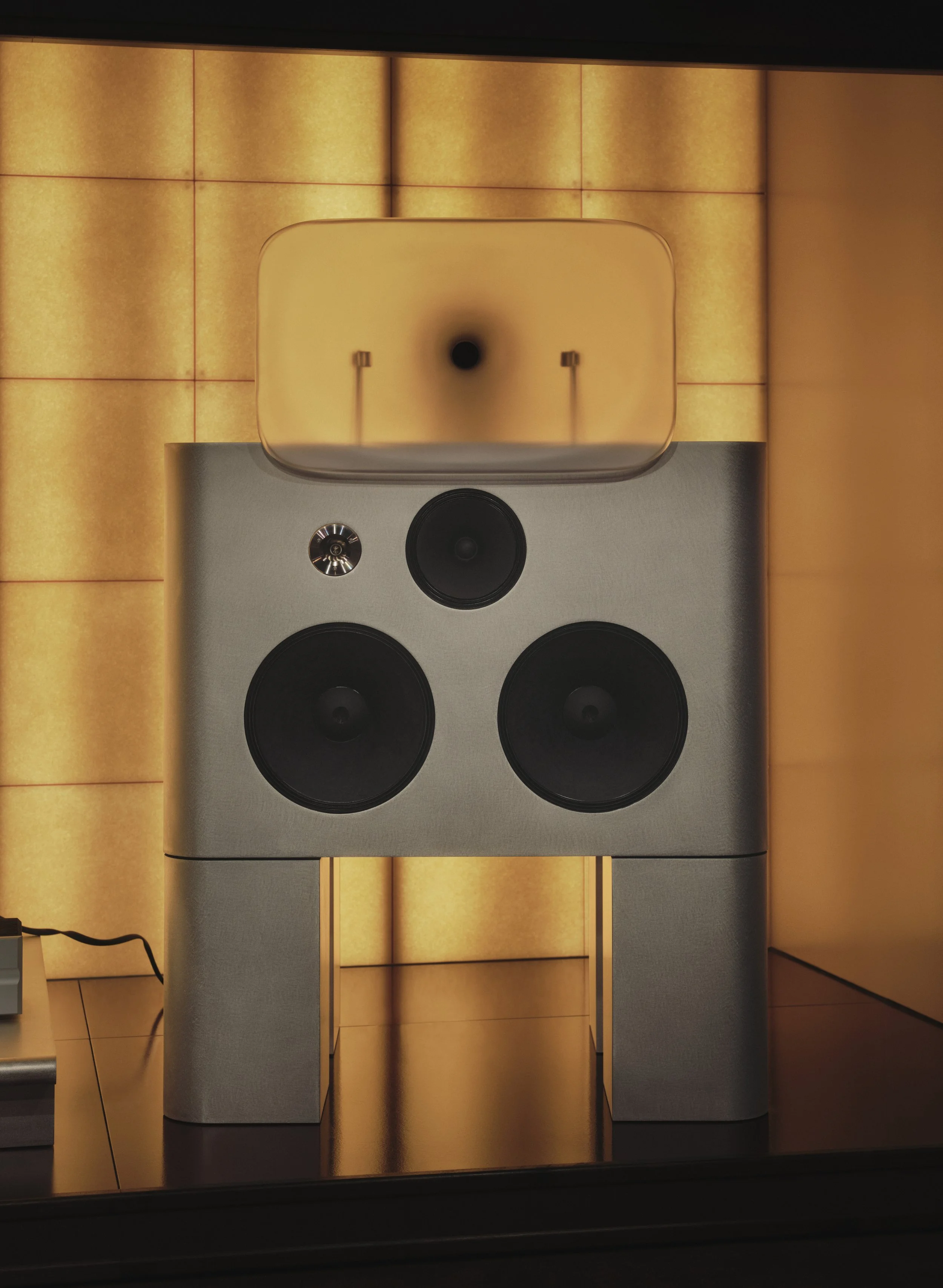
Friendly Pressure’s bespoke system anchors the space, reviving a heritage of British audio craftsmanship using ALNICO magnet drivers, components once synonymous with legendary studio recordings. It is a level of sonic precision rarely experienced outside of professional environments, now reintroduced as a cultural offering.
For The Fluxx, this alignment of architecture, engineering and cultural storytelling is what elevates the project beyond a brand activation into a meaningful design moment.
Communal Listening as the New Social Ritual

What Spotify introduces here is not just a space, but a behaviour. The Listening Lounge is designed to foster communal, intentional listening, moving away from the fragmented, individualised nature of modern streaming.
Through curated programming and access for artists’ top fans and premium users, the space creates a new kind of social experience. One where presence replaces distraction, and where music is encountered collectively, rather than passively consumed.
This shift reflects a broader desire for connection within nightlife and culture. A move towards environments that feel more considered, more intimate, and ultimately more meaningful.
Why Deep Listening Is Becoming a New Form of Luxury

As digital culture accelerates, attention becomes increasingly valuable. Within this context, deep listening is emerging as a new form of luxury, defined not by exclusivity alone, but by quality of experience.
Spaces like the Spotify Listening Lounge respond to this shift. They prioritise acoustics over spectacle, materiality over excess, and atmosphere over immediacy. The experience is slower, more immersive, and more deliberate.
This philosophy is now extending beyond public venues. Increasingly, we are seeing the rise of listening rooms within the domestic sphere, where high fidelity sound systems and acoustically considered interiors are becoming part of contemporary home design. Music is no longer background. It becomes a focal point of living.
The Designers Shaping the Movement
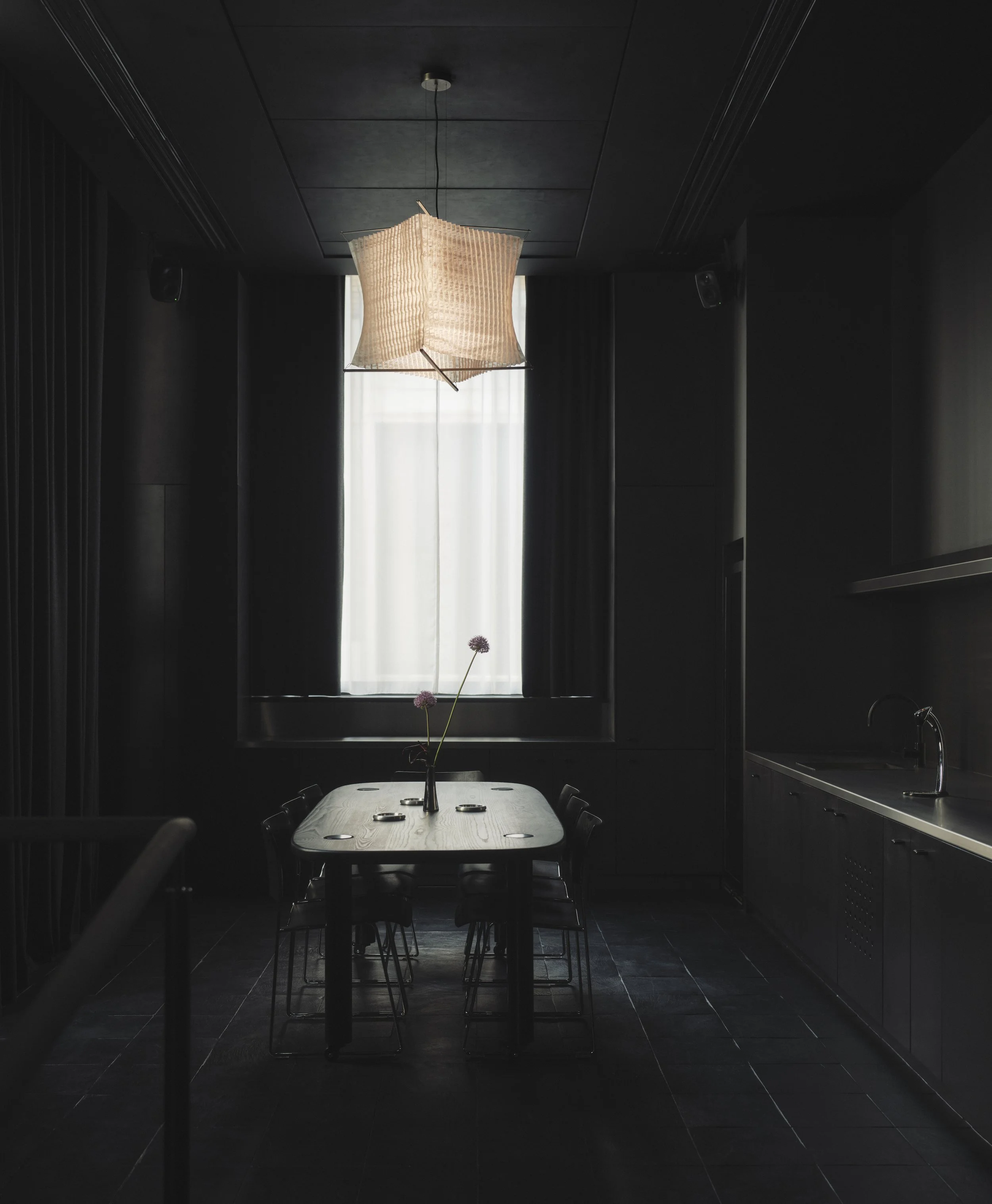

The involvement of Cake Architecture is particularly significant. Known for projects including Drumsheds, KOKO, Kricket Canary Wharf, and ARC, a communal contrast therapy club, the studio has consistently explored how space can shape collective experience.
Their work within hospitality, including venues already recognised by The Fluxx, demonstrates a clear understanding of atmosphere as a design tool. Here, that approach is distilled into its purest form, where sound itself becomes the central organising principle.
Alongside them, Friendly Pressure, led by Shivas Howard-Brown, continues to redefine how sound systems are designed, moving beyond technical function into cultural artefact. Their work, including bespoke speakers for spaces such as MOI Soho, reflects a growing appreciation for sound as both craft and identity.
A New Chapter for Music, Design and Experience

The Spotify Listening Lounge signals something larger than a single project. It marks a convergence of music, design and cultural experience, where each discipline informs the other.
For London, it reinforces the city’s position as a global centre for design-led hospitality and cultural innovation. For Spotify, it represents a shift from platform to place, where digital access is complemented by physical, immersive experience.
And for The Fluxx, it confirms what has been building for some time. That the future of luxury is not louder, faster or more visible. It is more considered, more sensory and more human.
Explore More Design News