Ai Weiwei Creates Silk Installation with Rubelli at Milan Design Week
When Silk Becomes Architecture
Artist Ai Weiwei collaborates with Venetian textile house Rubelli to transform historic silk weaving into an immersive design installation unveiled during Salone del Mobile.
At Salone del Mobile. Milano, the world’s most influential design event, materials often take centre stage. Each year designers, artists and craftspeople explore new ways of pushing traditional materials into unexpected territory. This year contemporary artist Ai Weiwei does exactly that in collaboration with Rubelli, the historic Venetian textile house renowned for its exceptional silk weaving.

Photography, Milan Design Week 2026 Selvedge Rubelli, Ai Weiwei About Silk, Felipe Sanguinetti.
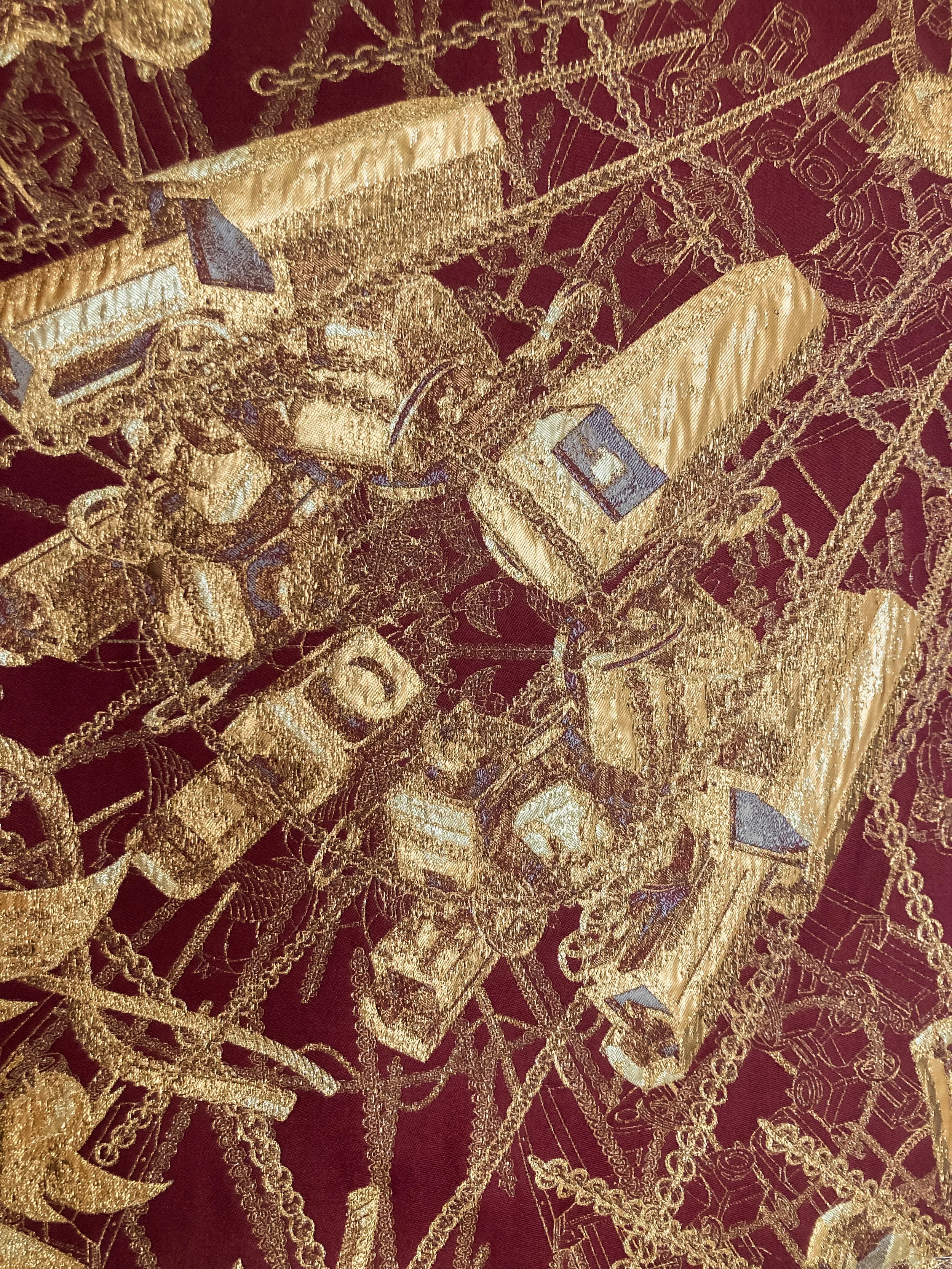
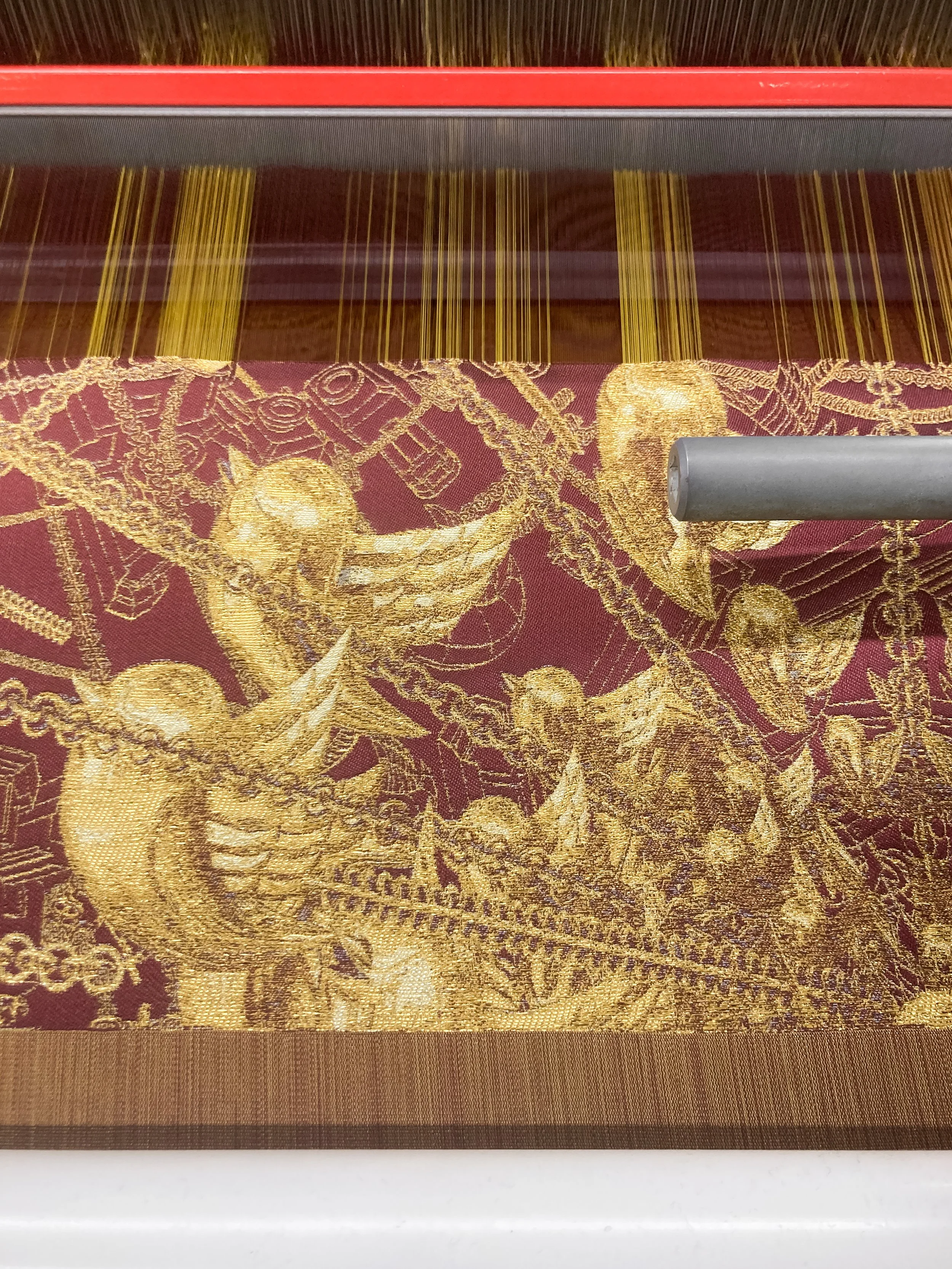
Presented inside Rubelli’s Milan showroom during Milan Design Week, the installation transforms traditional silk lampas fabric woven with gold thread into a fully immersive interior environment, one that blurs the boundaries between textile design, architecture and contemporary art. The result is less a decorative installation and more a spatial experience built entirely from fabric.
A Dialogue Between Craft and Contemporary Art
Founded in Venice in 1889, Rubelli has long been synonymous with luxury textiles, historic weaving techniques and Italian craftsmanship. Its fabrics have appeared in theatres, palaces and contemporary interiors around the world.Yet the brand has increasingly embraced collaborations with artists and designers who reinterpret heritage materials through a contemporary lens.

Photography, left Nicolò Favaretto Rubelli, right Ai Weiwei, Felipe Sanguinetti.
The collaboration with Ai Weiwei, one of the most influential contemporary artists working today, marks one of the house’s most compelling creative dialogues to date. Across the installation’s shimmering silk surfaces, visitors encounter woven symbols drawn from Ai Weiwei’s visual language, including surveillance cameras, chains and handcuffs.
Rendered in luminous silk, these motifs create a powerful contrast: symbols associated with power, control and surveillance are translated into intricate decorative patterns, turning protest into ornament and critique into craft.
Surveillance Cameras: A recurring motif in the artist's poetics, representing the omnipresent eye of power and a critique of social control. They recount his personal experience of being under special surveillance for years. In the fabric, these cold, geometric shapes are softened by the luster of metallic thread.
Handcuffs and Chains: Symbols of oppression and the artist's own imprisonment, these acquire a soft, tactile three-dimensionality in the lampas, almost suggesting a sense of liberation through art.
The Twitter Bird: An icon of digital communication and freedom of speech, it plays a fundamental role in spreading messages beyond the reach of censorship.
The Llama/Alpaca: Having become a symbol of freedom, dissent, and the fight against internet censorship in China, it represents the victory of irony and popular creativity over the rigidity of state control.
Silk, Symbolism and Cultural Exchange
The installation also carries a deeper material narrative.
Silk has historically connected East and West through trade, culture and artistic exchange, while Rubelli’s expertise is rooted in Venice’s centuries-old textile traditions. By weaving Ai Weiwei’s imagery into luxurious Italian silk fabrics, the collaboration becomes a meeting point between Chinese cultural heritage and Venetian craftsmanship.

Photography, Felipe Sanguinetti.
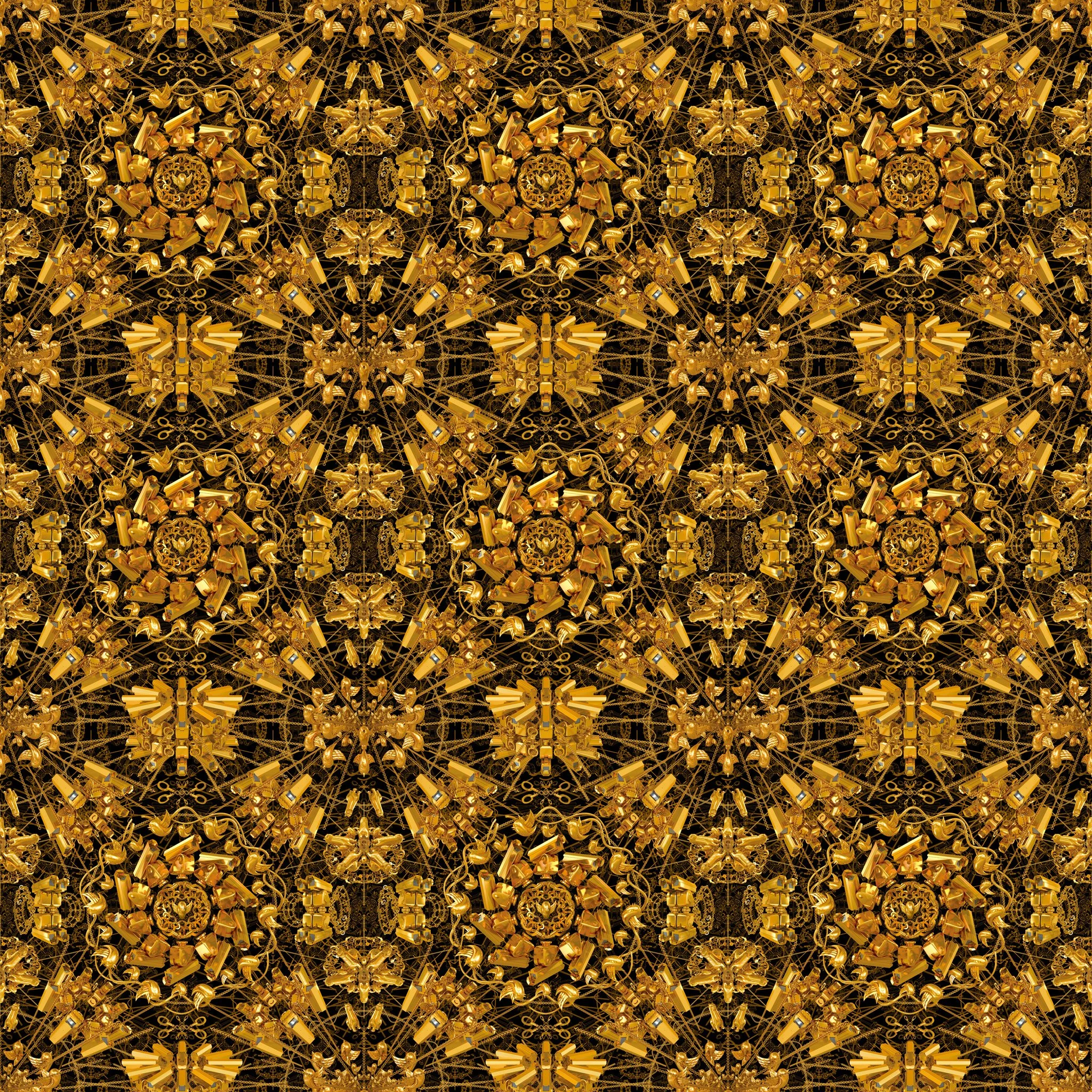
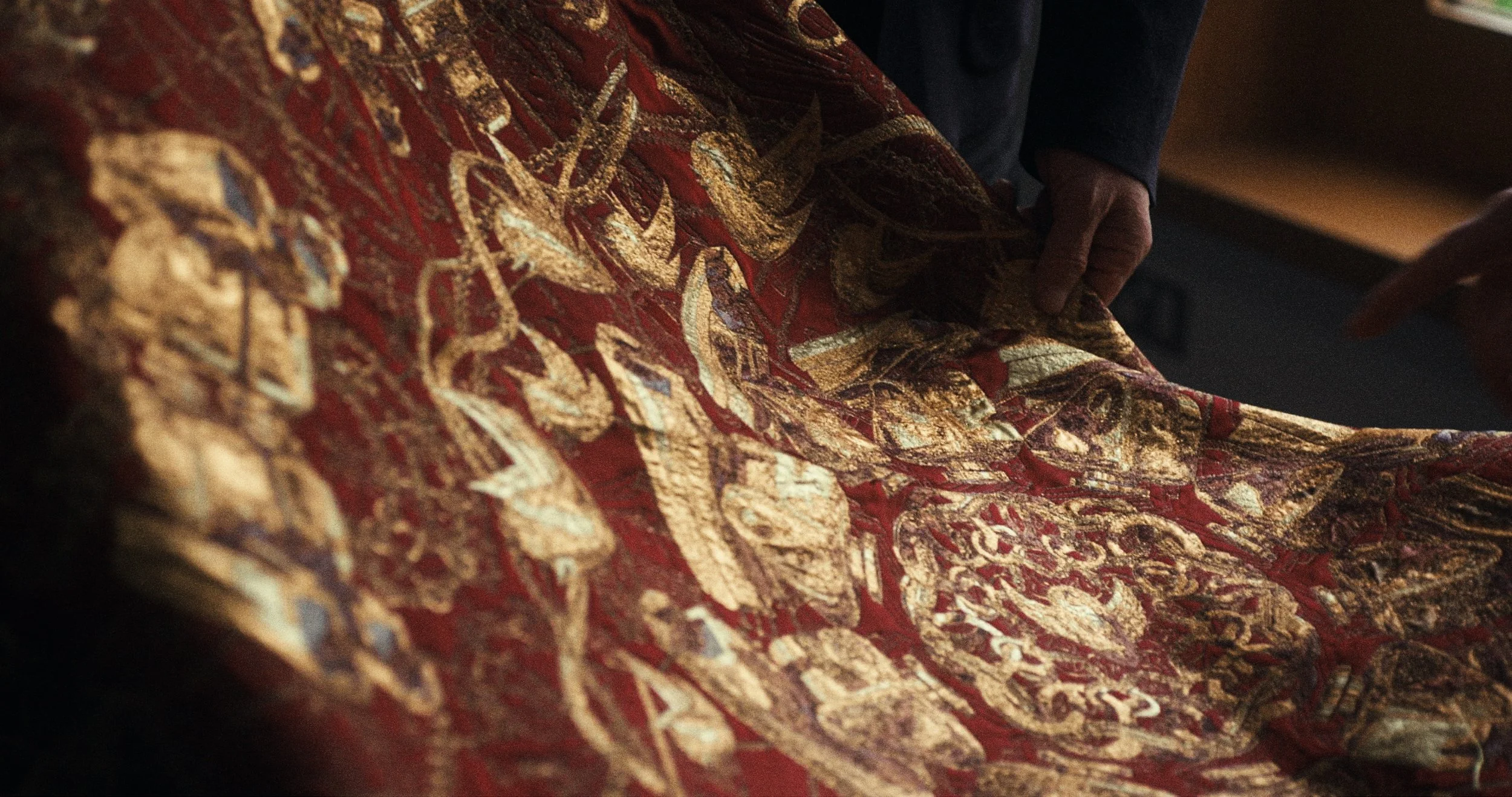
Left Rubelli & Ai Weiwei, original design. Photography Felipe Sanguinetti.
The technique used, silk lampas weaving with gold thread, is one of the most intricate and historically prestigious textile processes. In this context it elevates the installation from surface decoration to a monumental textile environment. As visitors move through the space, the textile becomes architecture.
Milan Design Week and the Expanding Language of Design
Projects such as this highlight how Salone del Mobile and Milan Design Week have evolved beyond furniture into a broader celebration of material innovation, craft and artistic collaboration.
Today the most compelling installations often sit at the intersection of art, architecture, textiles and design. The collaboration between Ai Weiwei and Rubelli reflects this shift perfectly. It demonstrates how historic craftsmanship can operate as a contemporary cultural medium, capable of carrying stories that resonate far beyond the domestic interior.
In doing so, the installation highlights something essential about design today: the most powerful spaces often begin with materials and the stories woven into them.

Photography, Ai Weiwei, Felipe Sanguinetti.
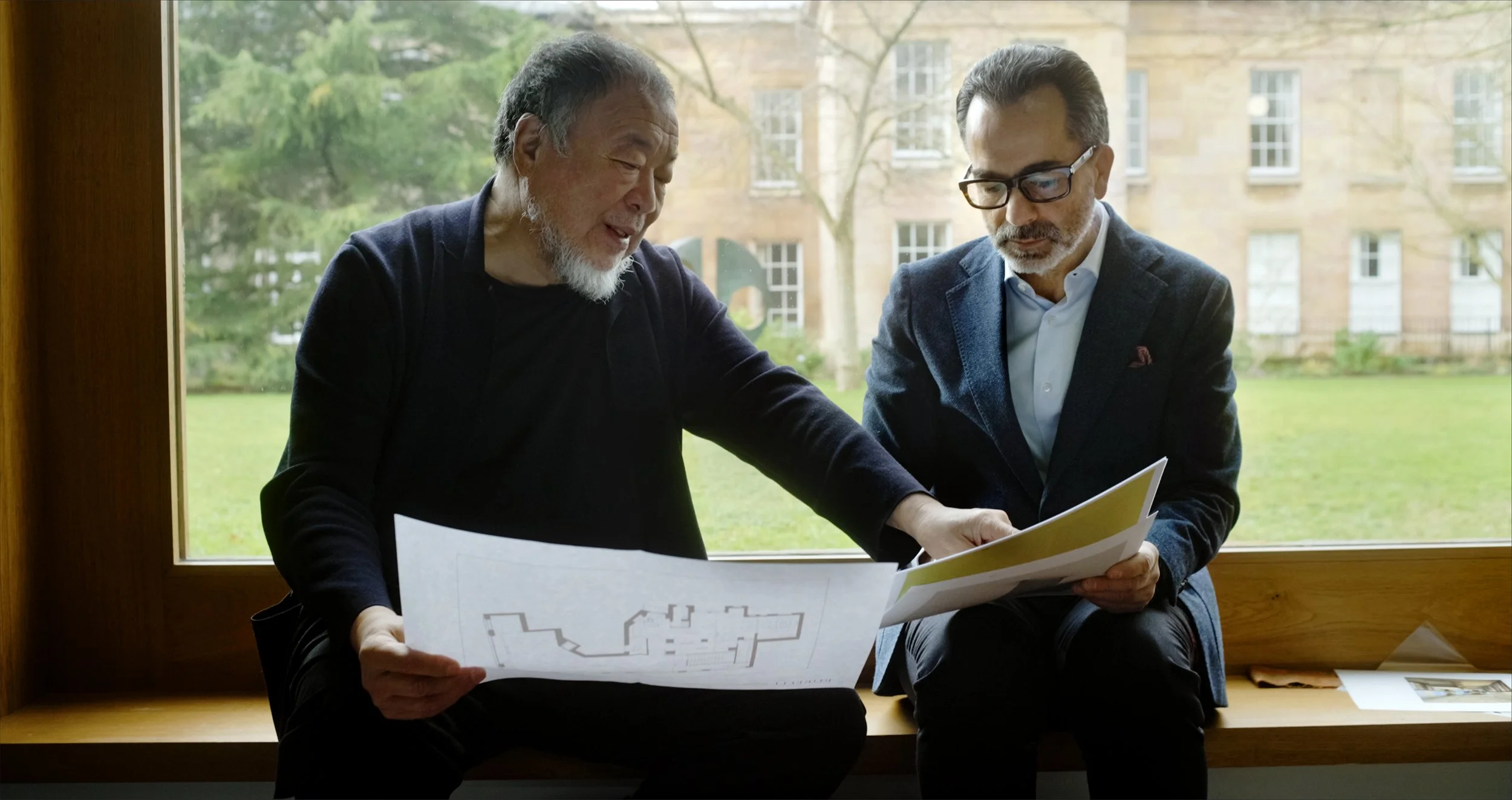
Left Ai Weiwei, right Nicolò Favaretto Rubelli. Photography Felipe Sanguinetti.
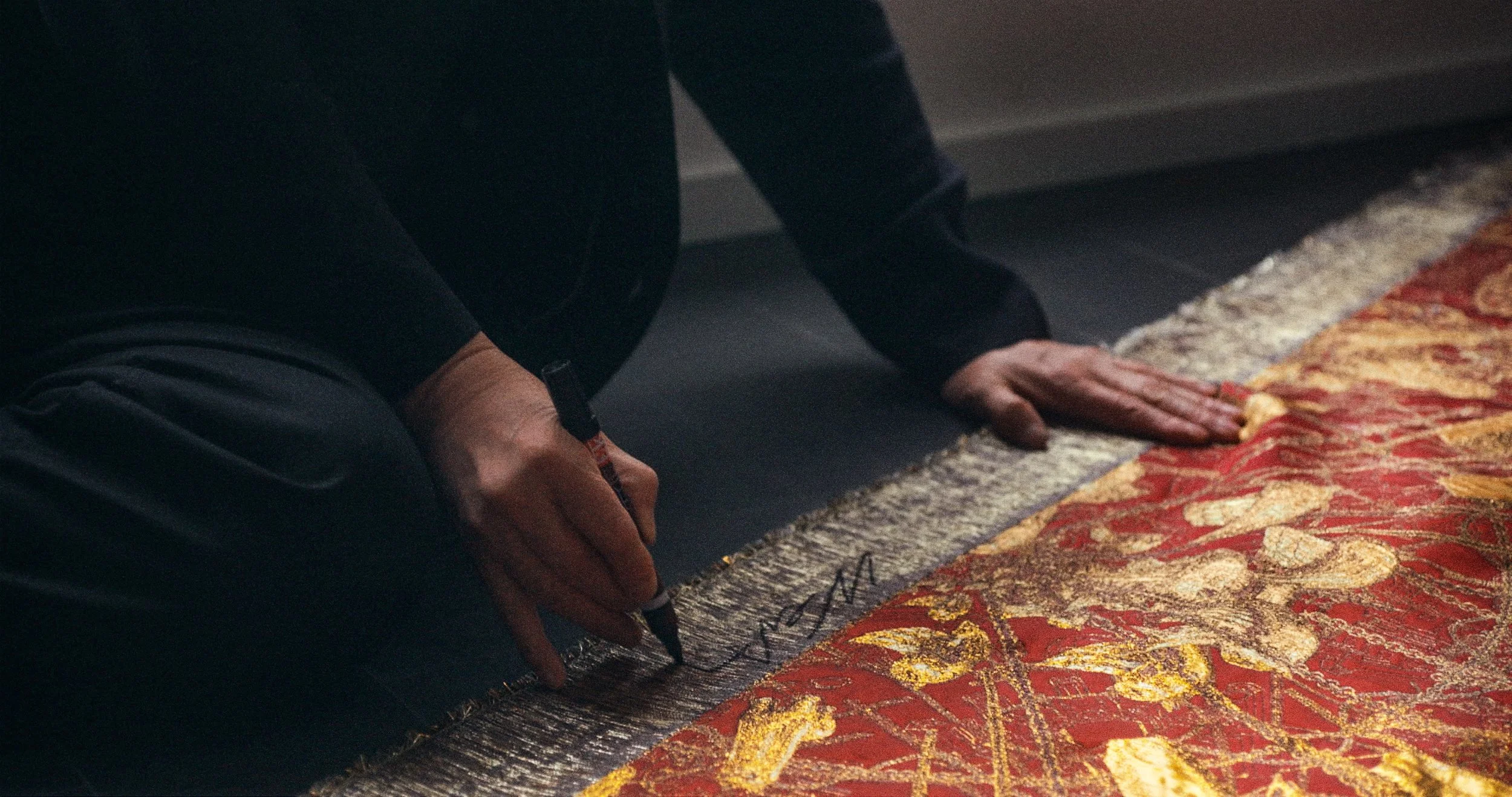
Photography, Felipe Sanguinetti.